
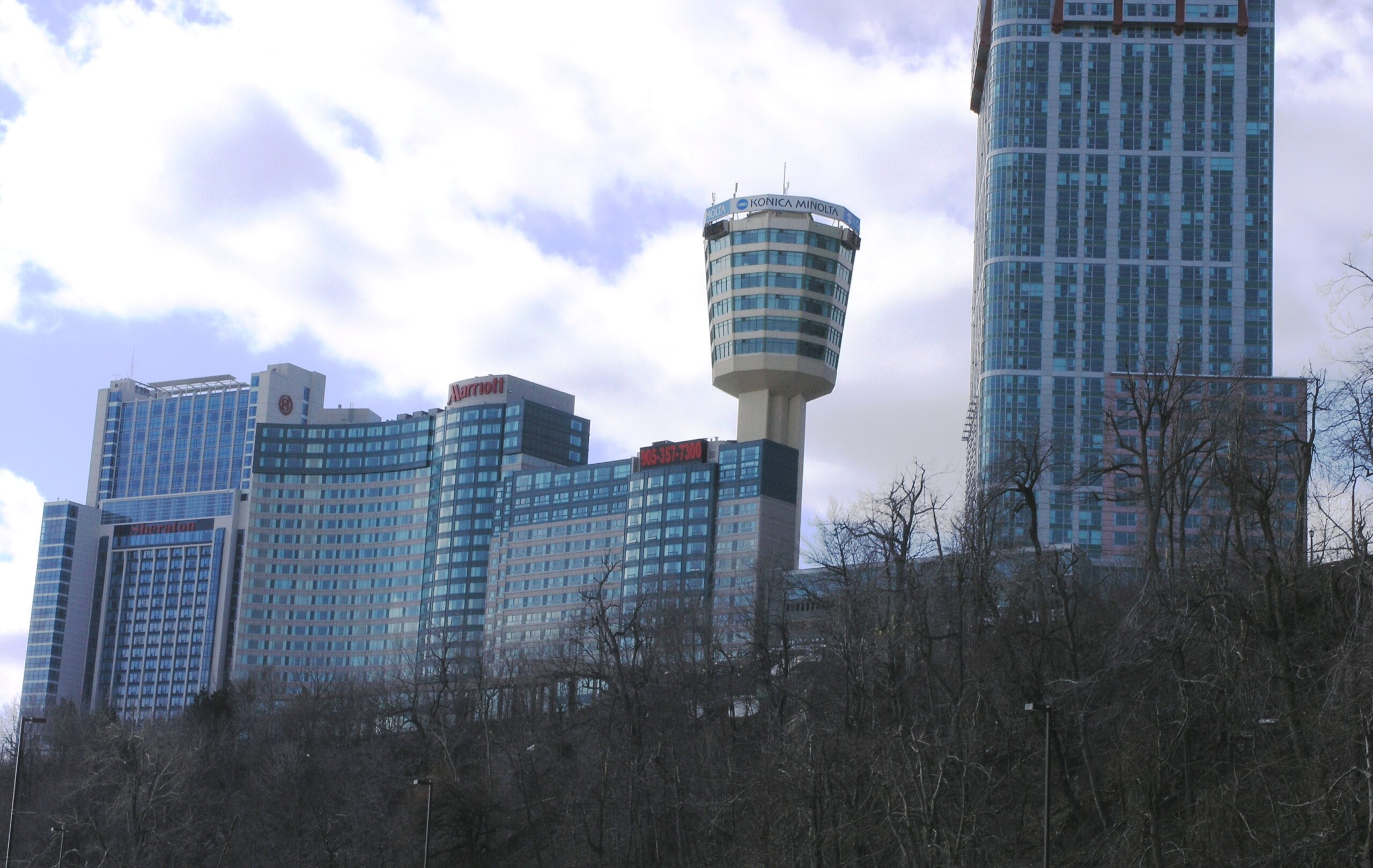
“Niagara Falls hotels” covers a lot of ground, and the right choice depends far more on which district you book than on any single property. The falls sit on an international border, with distinct neighbourhoods on the Ontario side and a separate city across the river in New York State. This is an orientation guide to those areas, what each one suits, and how to get between them, so you can narrow down before you dive into detailed hotel listings. We don’t sell rooms, so this is just the lay of the land.
Fallsview: closest to the water, most upscale
Fallsview is the high-rise district set on the escarpment directly above the Canadian Horseshoe Falls. This is where you’ll find the highest concentration of full-service and higher-end hotels, many marketing rooms with actual falls views (worth confirming exactly what a given room overlooks before you pay a premium). It’s also home to Fallsview Casino and is within walking distance of Table Rock and the clifftop parkway. Best for travellers who want the view front and centre and don’t mind paying for it.
Clifton Hill: families and entertainment
A short walk downhill toward the river, Clifton Hill is Niagara’s neon entertainment strip: wax museums, arcades, mini-golf, the SkyWheel and casual chain dining. It sits close to the brink of the falls and the Rainbow Bridge to the US. Hotels here range widely in price. Best for families with kids and anyone who wants attractions a few steps from the lobby, if you don’t mind crowds and a busier, brasher atmosphere.
Lundy’s Lane: value and space
Set back from the falls to the west, Lundy’s Lane is the traditional motel-and-value corridor, with more budget-friendly and family-sized rooms, easier parking and the Marineland area nearby. You trade walkability to the falls for a lower nightly rate. It’s the best pick for road-trippers, longer stays and travellers prioritising cost, especially since transit connects it to the falls (see below).
Niagara-on-the-Lake and the US side
About a 20 to 25-minute drive north, Niagara-on-the-Lake (roughly 20 km away) is wine country: a historic town of boutique inns, B&Bs and vineyard estates. It’s quieter and more romantic, and better if the falls are one stop on a broader Niagara trip rather than the whole point. Across the river, Niagara Falls, New York, puts you beside Niagara Falls State Park, the oldest state park in the United States, established in 1885. The US side is generally lower-key and closer to the American Falls; crossing the Rainbow Bridge on foot or by car requires a passport and a toll, and border waits can be long in peak season. Check current requirements before you plan to cross often.
Getting between areas
On the Ontario side, the WEGO bus system links the tourist districts, including Fallsview, Clifton Hill and Lundy’s Lane, with Niagara Parks attractions along the parkway, so staying for value doesn’t strand you. From Toronto, GO Transit runs weekend and seasonal train service to Niagara Falls year-round. Confirm current routes, fares and schedules with the official sources (Niagara Parks/WEGO and GO Transit) before you travel.
Frequently asked questions
Which area is best for first-time visitors?
For a first visit centred on the falls, Fallsview or Clifton Hill keep you within walking distance of the main viewpoints. Choose Fallsview for views and a calmer feel, Clifton Hill for attractions and a livelier, family-oriented scene.
Do I need a car?
Not if you stay near the falls and use the WEGO bus, and the GO train can bring you in from Toronto without one. A car helps if you’re basing yourself in Lundy’s Lane, touring Niagara-on-the-Lake wineries, or crossing to the US side.
Should I stay on the Canadian or US side?
The Ontario side generally offers the panoramic Horseshoe Falls views and more nightlife and dining density. The New York side sits right beside Niagara Falls State Park and tends to be quieter. Either works; just factor in the passport, toll and potential border wait if you plan to cross back and forth.