
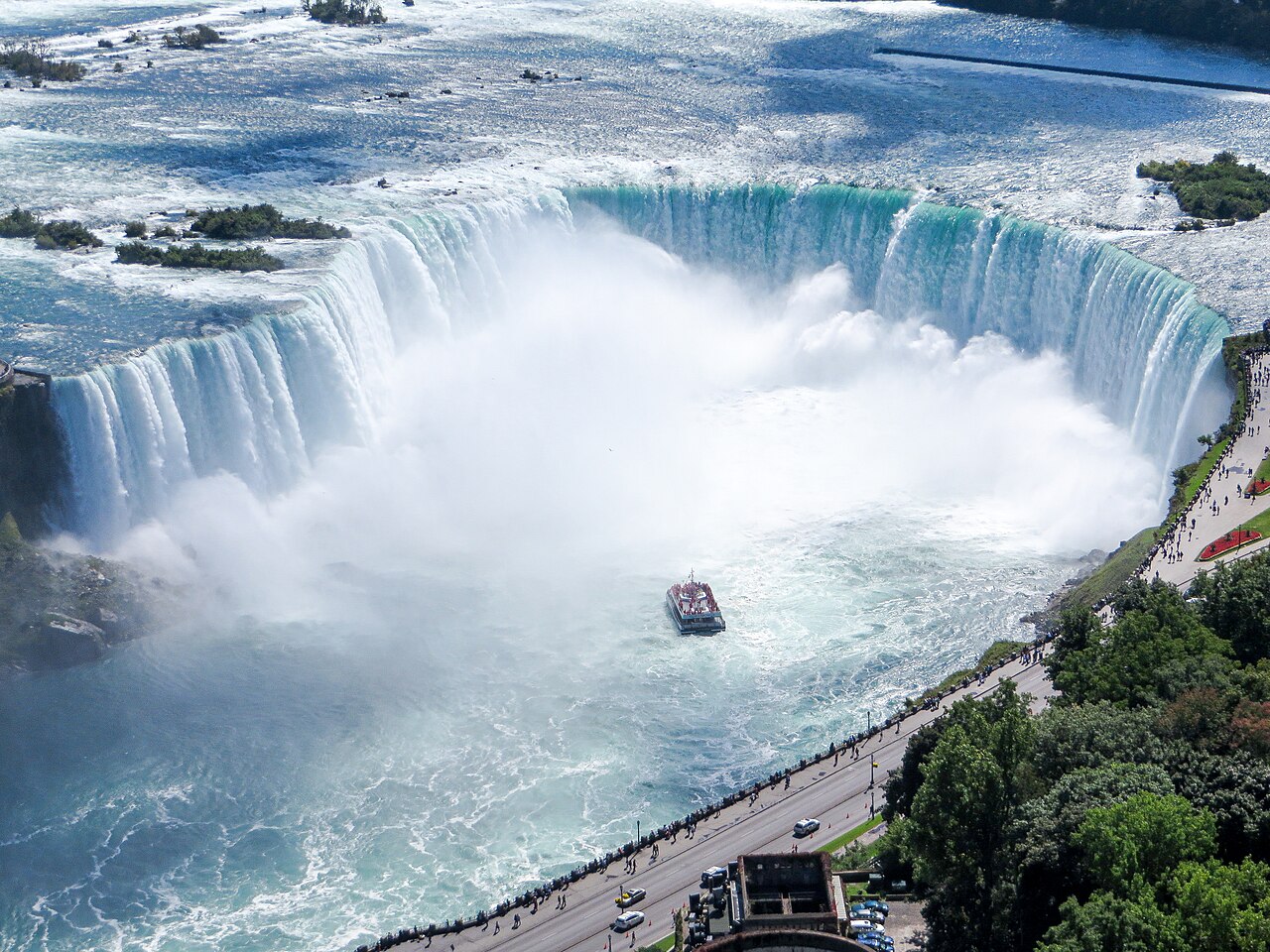
Niagara Falls, Ontario has a humid continental climate with four genuinely distinct seasons, each offering a different way to experience the Falls. Warm, humid summers bring the biggest crowds and full-schedule boat tours; brilliant autumns pair fall colours with the region's grape harvest and wine season; cold winters transform the gorge with frozen mist and the Winter Festival of Lights; and spring ushers in blossoms and quieter sightseeing. Knowing what to expect from the weather in each season helps you pack right and time your visit around the experiences you care about most.
Looking for today rather than the season? Our live Niagara Falls conditions page shows current wind and which viewpoints the spray is blowing over, whether the falls are at full or reduced scheduled flow, visibility and air quality on both sides of the border — updated hourly from Environment Canada and the US National Weather Service.
This guide walks through the year season by season, with approximate temperature ranges drawn from long-term climate normals, what to expect on the ground, packing tips, and the highlights that define each part of the year. One constant across all seasons: the mist rising from the Horseshoe Falls keeps the immediate viewing areas cool and damp, so a waterproof layer is smart no matter when you come.
Live from Open-Meteo · Niagara Falls, Ontario.
Spring (March to May)
Spring in Niagara Falls is a season of transition, and the numbers show it. Early March still leans wintry, with average daytime highs only around 4 C (about 39 F) and overnight lows dipping below freezing to roughly -2 C (28 F). By May the region has warmed noticeably, with typical highs near 17 C (63 F) and lows around 9 C (48 F). Expect changeable conditions: mild, sunny afternoons can be followed by cool, damp mornings, and rain is common as the snowpack finishes melting.
The payoff is a landscape coming back to life. The Niagara Parks gardens and the Niagara Parkway fill in with blossoms and fresh greenery, and spring is one of the quieter, more relaxed times to see the Falls before summer crowds arrive. The mist zone near the Horseshoe Falls stays cool and damp year-round, so it can feel several degrees colder right at the brink than the daily average suggests. Seasonal attractions such as the Niagara City Cruises boat tour typically begin their season in spring, though exact opening dates shift from year to year and are weather-dependent, so confirm current timing with the official operator before you go.
- Layers you can add and remove as afternoons warm up
- A light waterproof or windproof jacket for rain and Falls mist
- Comfortable, water-resistant walking shoes
- An umbrella or packable rain shell
- Sunglasses and sunscreen for brighter, longer days
Summer (June to August)
Summer is Niagara's warmest and busiest stretch. July is typically the hottest month, with average highs around 26 to 27 C (roughly 79 to 81 F) and overnight lows near 18 C (64 F); June and August sit only slightly cooler. Humidity is a real factor here, and the combination of heat and moisture from the river can make afternoons feel warmer than the thermometer reads. Thunderstorms roll through periodically, but long daylight hours and reliably warm weather make this prime visiting season.
This is peak crowd season, so plan for busy attractions, fuller parking, and higher demand for hotels, especially on weekends and around holidays. It is also the best window for on-the-water experiences: the Niagara City Cruises Voyage to the Falls boat tour runs at full schedule through summer, bringing you close enough to the Horseshoe Falls to be soaked by the spray. Booking timed tickets in advance and arriving early in the day both help you beat the biggest lines.
- Lightweight, breathable clothing for heat and humidity
- A poncho or quick-dry layer for boat tours and misty viewpoints (some attractions provide one)
- Sunscreen, sunglasses, and a hat
- A refillable water bottle for hot, crowded days
- Comfortable walking shoes and a light layer for cooler evenings
Fall (September to November)
Fall may be the most rewarding season to visit. September stays comfortably warm, with average highs around 22 C (72 F) and lows near 13 C (55 F), before the weather cools steadily. By November, daytime highs settle around 8 C (46 F) and overnight lows drop close to 1 C (34 F). Crisp, clear days and thinning summer crowds make for easy sightseeing, and the changing foliage along the Niagara Parkway and the gorge puts on a display of reds, oranges, and golds.
Fall is also harvest season in Niagara wine country. The surrounding Niagara Peninsula is one of Canada's premier wine regions, and the grape harvest generally runs from roughly September into November, making autumn a popular time for winery visits and tastings in nearby Niagara-on-the-Lake. Boat tours and other outdoor attractions usually continue into the fall, with seasonal operations winding down as the weather turns colder, so check current schedules if a specific experience is on your list.
- Warm layers, including a sweater or fleece for cool evenings
- A medium-weight jacket, heavier toward November
- Comfortable walking shoes for gardens, trails, and wine tours
- A light rain jacket for unsettled days
- A camera for peak foliage along the Parkway and gorge
Winter (December to February)
Winter is cold but visually spectacular. January is typically the coldest month, with average highs hovering around 0 to -1 C (roughly 30 to 32 F) and overnight lows near -6 to -7 C (about 19 to 21 F); December and February are similar, and a snow season generally runs from about mid-November through mid-April. The Falls do not truly freeze solid, but in deep cold the mist and spray coat railings, trees, rocks, and cliffs in thick ice, building dramatic frozen formations and icicles that transform the gorge into a glittering winter scene.
The season's signature event is the Winter Festival of Lights, one of Canada's largest outdoor light festivals, which illuminates Queen Victoria Park and the tourist districts on winter evenings from roughly mid-November into early January (confirm current dates each year). Winter is also icewine season: the surrounding wineries harvest grapes frozen on the vine once temperatures drop low enough, and Niagara's Icewine Festival is a January highlight. Crowds are lightest in winter, but conditions can be icy and windy near the Falls, so dress for serious cold.
- A warm, insulated winter coat
- Hat, gloves or mittens, and a scarf
- Warm, waterproof, non-slip boots for icy paths
- Thermal or layered clothing to trap heat
- Hand warmers and a thermos for extended time outdoors
Planning Your Visit
The temperature ranges above are long-term climate averages meant to help you plan and pack; actual conditions on any given day can vary well above or below them. Because the mist zone at the brink of the Horseshoe Falls stays cool and damp in every season, it is worth carrying a light waterproof layer year-round. For the current forecast during your trip, check the live weather widget on this page, and verify seasonal attraction schedules and festival dates with official sources before you travel.
Sources: climate.weather.gc.ca · weatherspark.com · www.timeanddate.com · weather-and-climate.com · www.niagaraparks.com. Last reviewed 2026-07-18.