
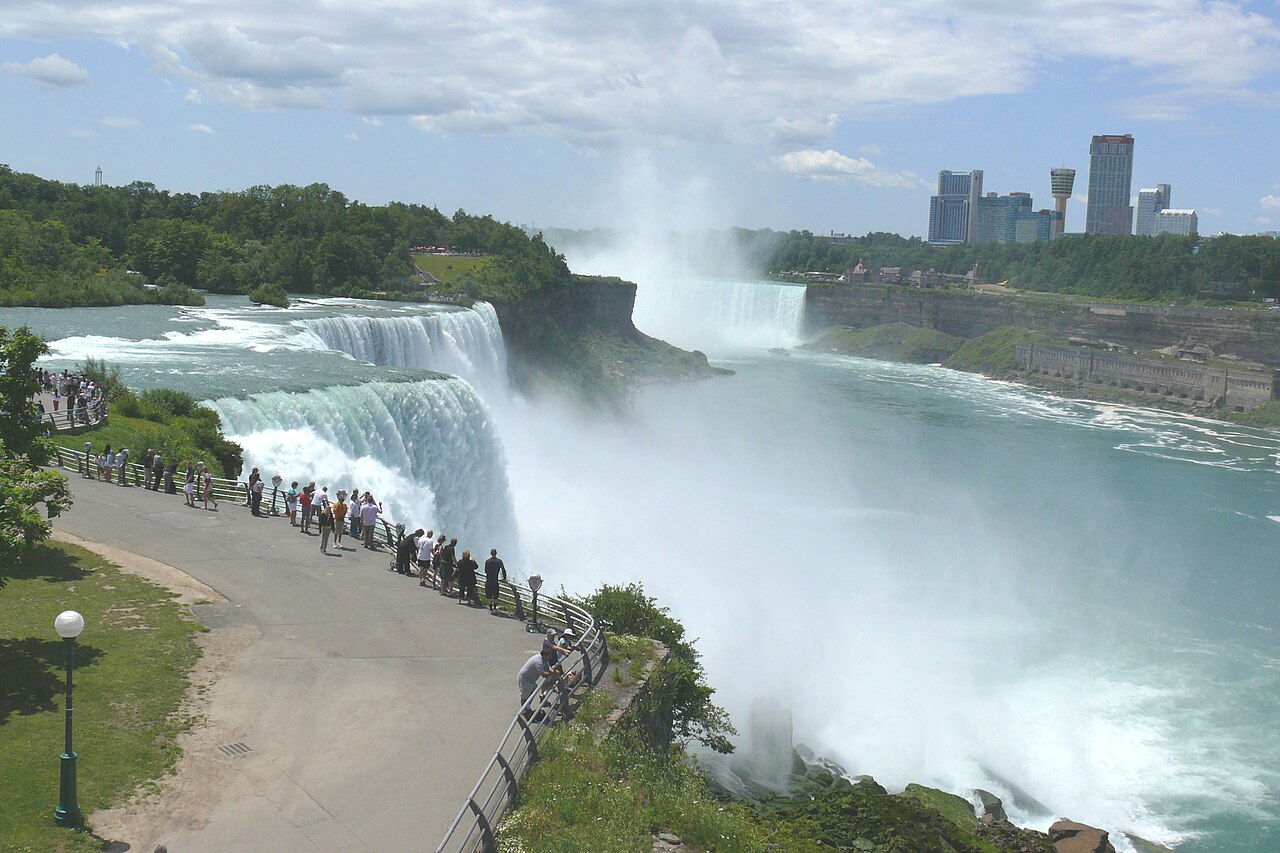
Here is the short answer: seeing Niagara Falls costs nothing. Not on the American side, not on the Canadian side. There is no ticket booth between you and the water, no gate, no admission fee. What costs money is everything built around the falls — boat rides, observation decks and, above all, parking. Understand that distinction and you can spend a genuinely full day here without opening your wallet. Miss it and you can spend forty dollars before you have even seen the water. This is an honest list: where something is free, it is free, and where there is a catch, it is named.
Niagara Falls State Park is free to enter. Parking is not.
On the New York side, everything sits inside Niagara Falls State Park, the oldest state park in the United States. New York State Parks puts it plainly: the park charges a vehicle fee to enter the facility, but it is always free to just walk in. No admission, no wristband, no pass.
On foot, the best viewpoints cost nothing. Prospect Point puts you at the railing beside the brink of the American Falls. Goat Island sits between the American and Horseshoe Falls, and you can walk its full loop for free. Luna Island is a small platform wedged between the American and Bridal Veil Falls, and one of the most underrated spots in the park. Terrapin Point gives you the Horseshoe from the American shore. The Three Sisters Islands let you stand right in the rapids above the falls with a fraction of the crowd.
The catch is parking — expect roughly ten dollars on a weekday and more on a summer weekend, varying by lot and season. Check the current rate rather than trusting any number you read online, including this one. The workaround is simple: park downtown, outside the park lots, and walk in. One clarification, because it trips people up: the Observation Tower at Prospect Point is not the Prospect Point viewing area. The viewing area is free; the tower carries a small charge, included if you have bought a Maid of the Mist ticket.
Queen Victoria Park and Table Rock, on the Canadian side
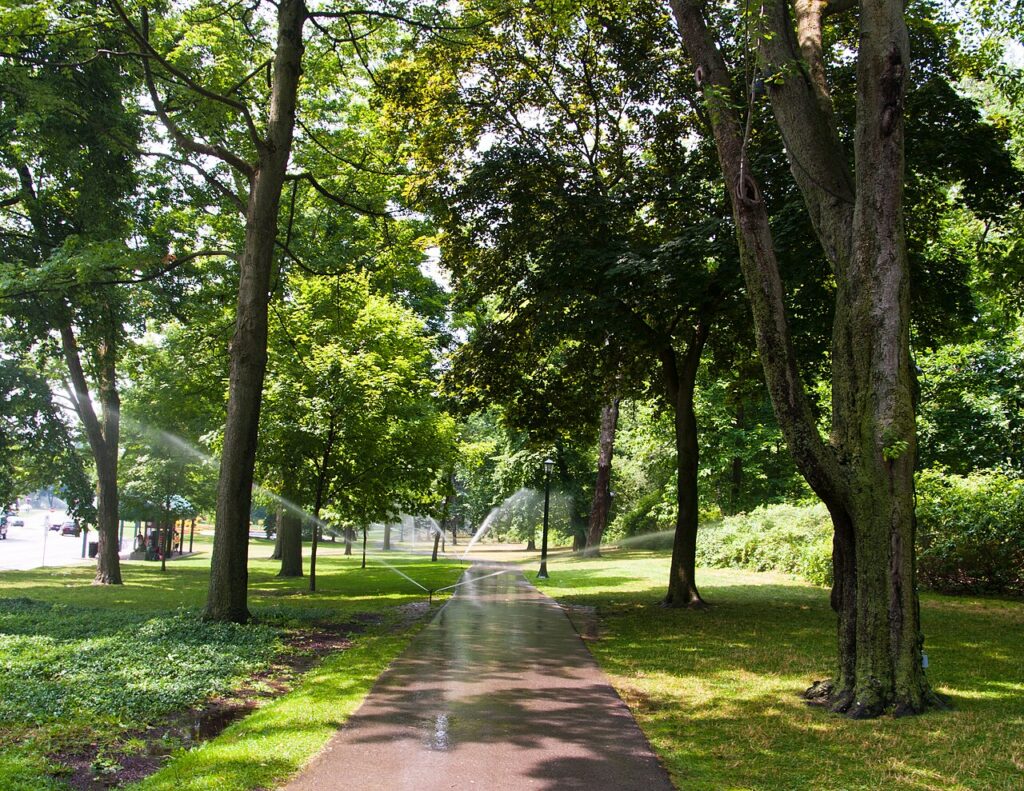
The Canadian view is the famous one, and it is also free. Queen Victoria Park runs along the Niagara Parkway directly opposite the falls, with no fee and no gate. Parking is again the catch: the lots nearest the falls are the priciest in the region, but Niagara Parks maintains dozens of free parking areas toward the ends of the Parkway. Park at one and walk in. A rental car in Niagara Falls makes the trail and Niagara-on-the-Lake far easier to reach, but if you are staying near the falls, a car is mostly a parking bill.
Table Rock is the headline. The terrace puts you within metres of the brink of Horseshoe Falls, close enough to feel the spray, and you do not need to buy anything to stand there. It is the single best free thing in Niagara. Do not confuse it with Journey Behind the Falls, which departs from the same building — that one is paid. The terrace outside is free.
The illumination and the fireworks
The falls are lit after dark every night of the year, rotating through colours, and watching costs nothing from any public viewing area. Start times follow dusk, so they shift through the year, and the lights typically run until around 11pm. Come back after dinner and you get a completely different waterfall from the one you saw at noon, with a fraction of the crowd.
Niagara Parks also runs a fireworks series over the falls through the warmer months, generally at 10pm across the summer season and into October, with extended displays on Canada Day and Independence Day. It is free from any public outdoor area — the only way to pay for the fireworks is to watch from somewhere that charges. The schedule shifts year to year, so confirm current dates with Niagara Parks. If you would rather watch from a balcony than a railing, that is one of the few genuine arguments for a hotel overlooking Niagara Falls — you are paying for the view, not the show.
The Niagara River Recreation Trail
The most underrated free thing in the region. This paved path runs roughly 53 kilometres, about 32 miles, along the Canadian side of the river from Fort Erie to Niagara-on-the-Lake, passing gorge lookouts and quiet riverbank most visitors never see. It is free to use, with free parking at many points along the parkway. You do not need to do all of it — the stretch from the falls north toward the Whirlpool is a manageable walk with real payoff. To cover more ground, cycling the Niagara trails turns the whole corridor into a day out, flat and paved nearly the whole way.
Free gorge views: the Whirlpool and Niagara Glen
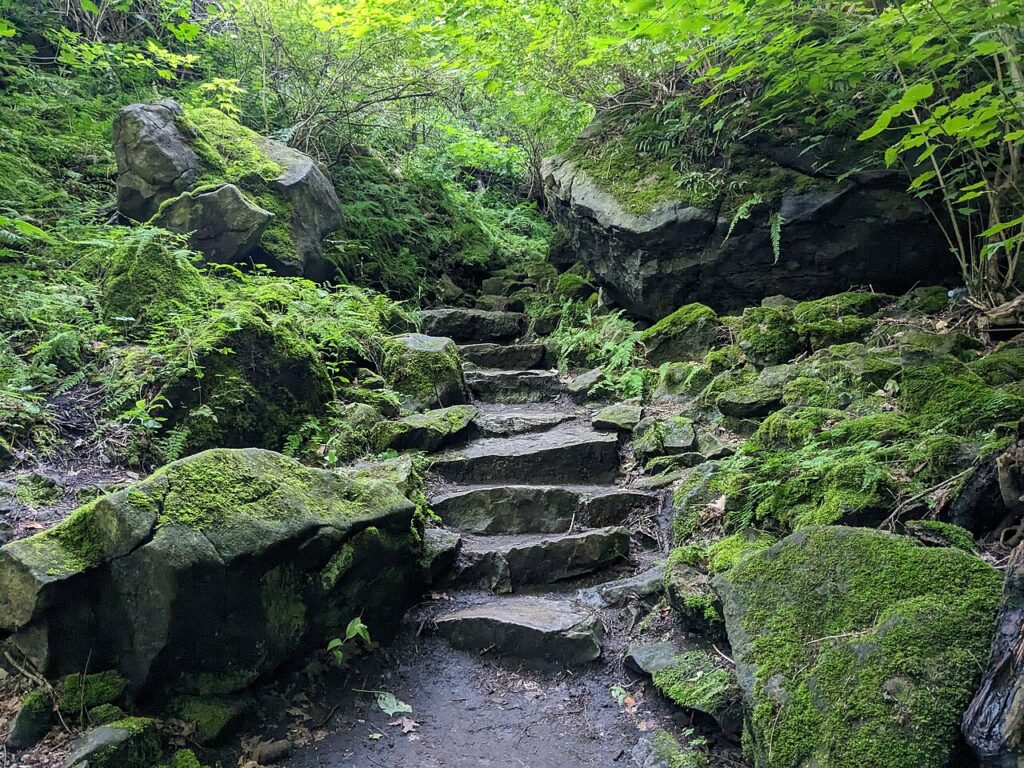
Downstream, the river swings through a right-angle turn into the Niagara Whirlpool. There is a viewing platform beside the Whirlpool Aero Car ticket window where you can look out over the gorge and the rapids without riding the cable car. Nearby, the Niagara Glen drops into the gorge on hiking trails that are free to walk — steep stairs and uneven rock, and the closest you will get to the raw river without paying. Wear real shoes. The paid siblings are the Aero Car and the White Water Walk; both are good, neither is necessary to see the whirlpool.
Walking the Rainbow Bridge: the almost-free one
You can walk between the two countries in about ten to fifteen minutes with the falls in view the whole way. It is not quite free, so here is the precise position: the Niagara Falls Bridge Commission collects a pedestrian toll of one US dollar, or one dollar twenty-five Canadian, on the Canadian side as you head toward the United States. Walking from the American side into Canada, pedestrians are not charged a toll. The bridge is open around the clock, every day.
The real requirement is not money, it is documents. You need a valid passport to cross in either direction — this is a genuine international border, not a novelty.
Niagara-on-the-Lake
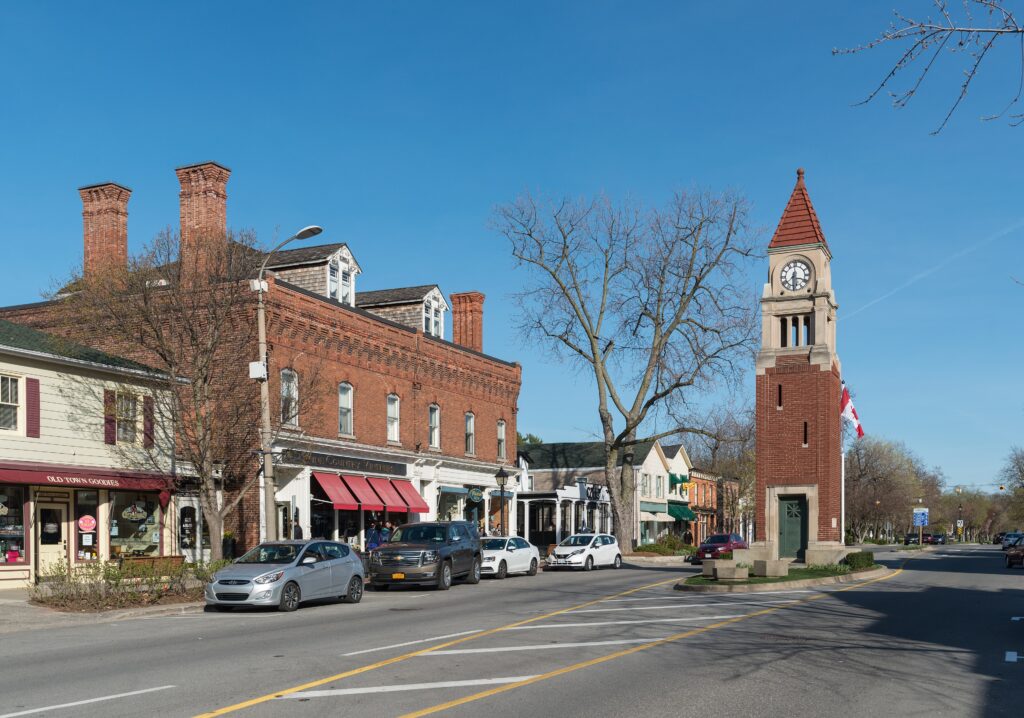
Twenty minutes north, Niagara-on-the-Lake is a nineteenth-century town on Lake Ontario, and simply walking it costs nothing. Queen’s Royal Park sits where the river meets the lake, with a white gazebo, sailboats, and a view across the water to Old Fort Niagara on the American shore.
There is a notable free window in 2026: through the Canada Strong Pass, Parks Canada is offering free admission at its national historic sites from 19 June to 7 September 2026, including Fort George and its War of 1812 buildings. There is nothing to buy or collect — you simply walk in. Outside that window there is an admission charge, though under-18s are free year-round, so check current rates if you are visiting later.
Frequently asked questions
Is Niagara Falls free to visit?
Yes. Viewing the falls is free on both sides. Niagara Falls State Park has no admission fee and is free to walk into, and Queen Victoria Park and the Table Rock terrace are also free. You pay for parking and for individual attractions such as boat tours, not for the falls.
Do you have to pay to get into Niagara Falls State Park?
No. There is no entrance fee for people. The park charges a vehicle fee for its parking lots, which is where the confusion comes from — but if you arrive on foot, by bus or by bike, you walk straight in for nothing.
Which side is better for free things to do?
The Canadian side has the better free view: you are looking straight at the face of Horseshoe Falls rather than standing on top of it. The American side gets you closer to the water and has more free trails and islands. If you want the classic photograph, choose Canada.
Does it cost anything to walk across the Rainbow Bridge?
There is a small pedestrian toll — one US dollar, or one dollar twenty-five Canadian — collected on the Canadian side when walking toward the United States. Heading into Canada from the American side, pedestrians are not charged. You need a valid passport in both directions.
A free day here is not a compromise. The falls, the illumination, the fireworks, the trail and the gorge are the best of Niagara, and none of them sit behind a paywall. Spend your money on what is genuinely worth it instead — dinner at one of the best pizzerias in Niagara Falls when you come off the trail. Bring layers, bring a passport, and expect to get slightly wet.