
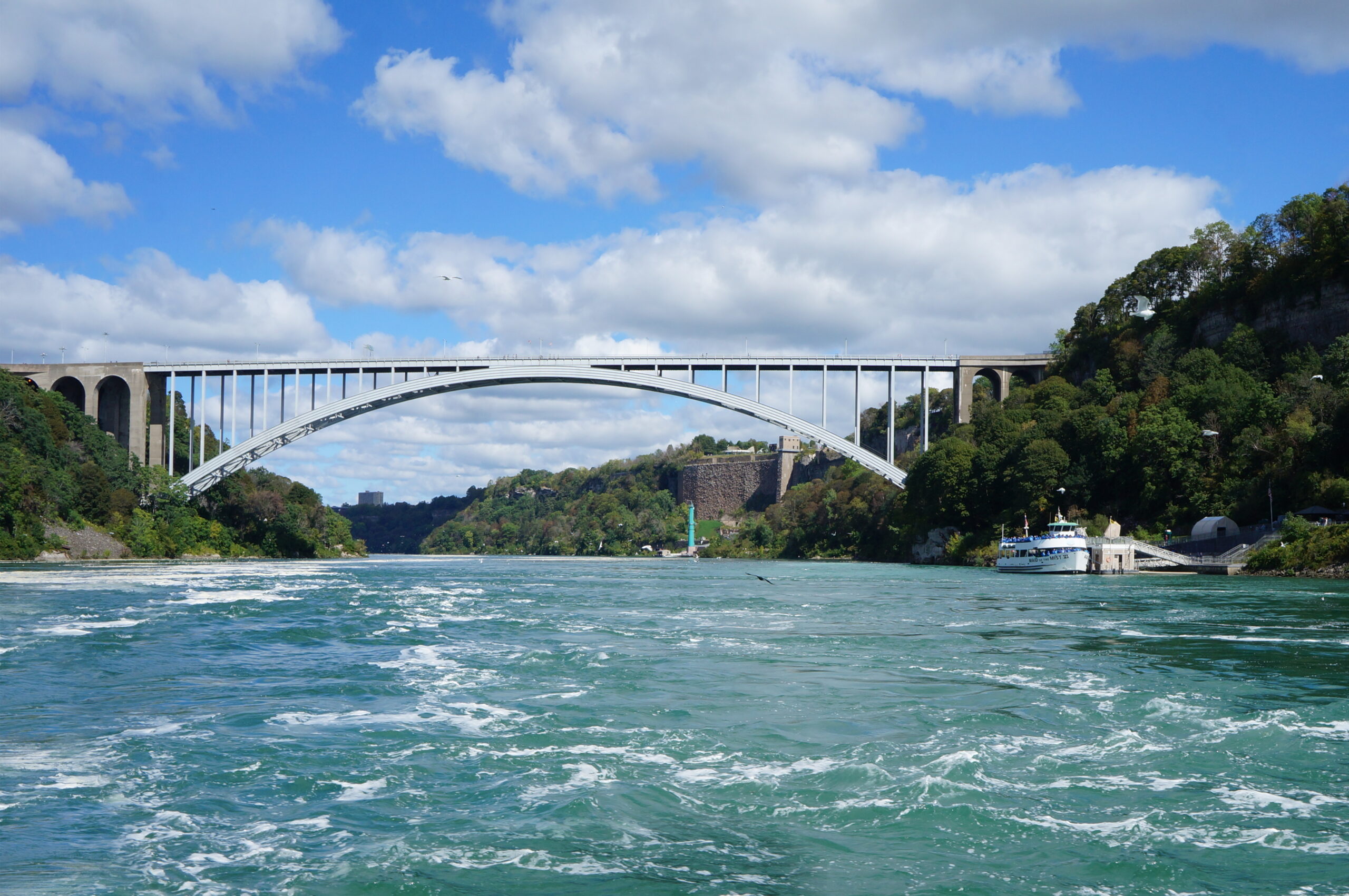
Niagara Falls is one of the few places where you can stand in one country, look at a waterfall, and walk to another in about fifteen minutes. To do it you need a passport or another approved travel document — a driving licence alone will not get you across in either direction. There are four bridges here, only two of which you can cross on foot.
The four bridges, and which one to take
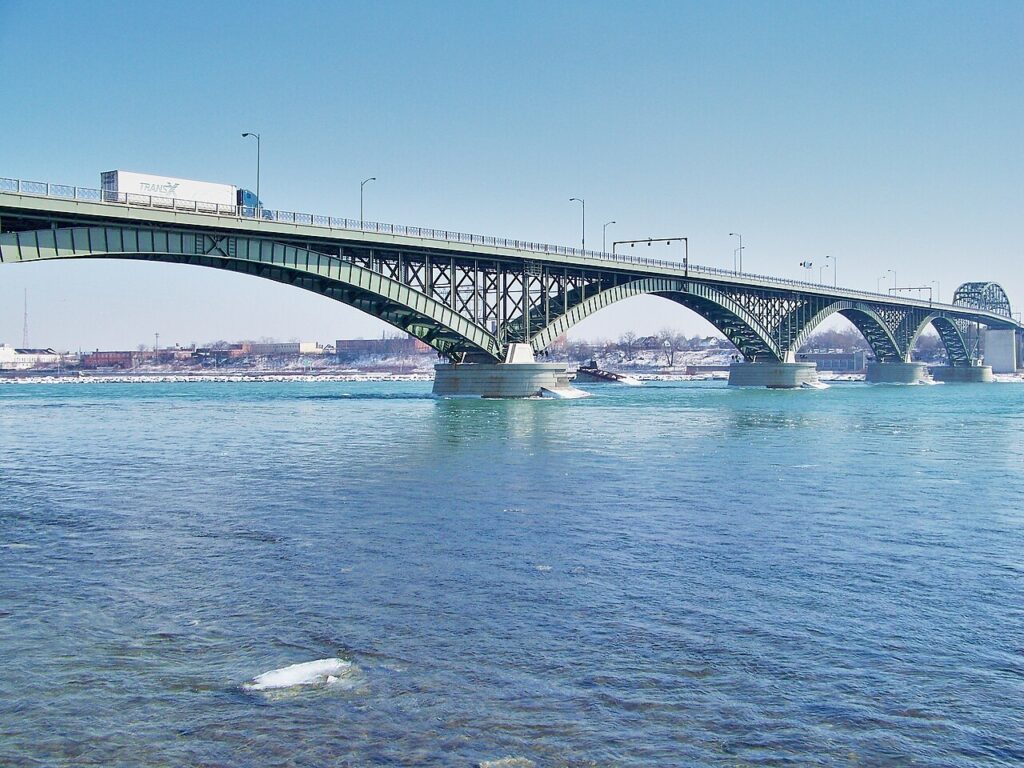
Three crossings are run by the Niagara Falls Bridge Commission; the fourth, the Peace Bridge, is run by a separate authority at Buffalo–Fort Erie. They are not interchangeable, and picking the wrong one can cost you an hour.
- Rainbow Bridge — the one nearly every visitor wants, right by the falls. Takes cars, RVs, buses and bicycles, and crucially it has the pedestrian walkway. No commercial trucks.
- Whirlpool Rapids Bridge — NEXUS cardholders only, cars only. No pedestrians, no bicycles, nothing in tow. Global Entry is accepted US-bound only. Limited hours.
- Lewiston–Queenston Bridge — the workhorse to the north, carrying trucks alongside cars, and the natural choice for the highway. Bicycles ride in the roadway with traffic. No pedestrians. Dedicated NEXUS lanes at certain hours.
- Peace Bridge — Buffalo to Fort Erie, useful if you are flying via Buffalo. Pedestrians and cyclists may cross at any time, toll free, using the south sidewalk in both directions — though that walkway has closed for construction before, so confirm it is open if you are counting on it.
The Bridge Commission lists exactly what each bridge allows. Tolls apply on its three crossings and rates change, so check their current toll page rather than trusting a figure from a blog post.
What documents you need
US citizens crossing at a land border fall under the Western Hemisphere Travel Initiative. CBP accepts a valid US passport, a passport card, an enhanced driver’s licence, or a trusted traveller card such as NEXUS, SENTRI or FAST. Enhanced licences are issued by only a few states — Michigan, Minnesota, New York, Vermont and Washington — so from anywhere else, a passport or passport card is your route. The full list is on CBP’s WHTI page. The card and enhanced licence work at land and sea crossings only, so if there is any chance you will fly home, bring the book.
Canadians should apply the same logic in reverse: a passport is the cleanest document, NEXUS an alternative for members. Bring proof of citizenship, not just a provincial licence.
Visitors from the UK, Ireland, Australia and other visa-waiver countries hit the part that catches people out, because the two governments treat land crossings very differently:
- Entering the US by land, you need an approved ESTA. Since 1 October 2022 CBP has required Visa Waiver Program travellers to hold one before seeking admission at land ports of entry, not just at airports. Apply at least 72 hours ahead. Arrive at the Rainbow Bridge without one and you may simply be sent back to try again. A separate I-94 fee generally applies at land crossings on top of the ESTA fee.
- Entering Canada by land, you do not need an eTA. Canada’s electronic travel authorisation applies to flying into or transiting a Canadian airport. Visa-exempt travellers arriving by car, bus, train or boat do not need one. If you are from a visa-required country you still need a visitor visa — an eTA does not substitute at a land border. Canada’s eTA facts page spells this out.
Is ArriveCAN still required?
No. ArriveCAN has not been mandatory since Canada dropped its pandemic entry measures, and you do not need it to cross at Niagara. The app still exists, but its Advance Declaration feature is built for travellers flying into participating Canadian airports — it is not part of the land border process. At the bridge you reach primary inspection and make your declaration verbally to an officer. CBSA’s ArriveCAN page is the source of record.
Walking across versus driving
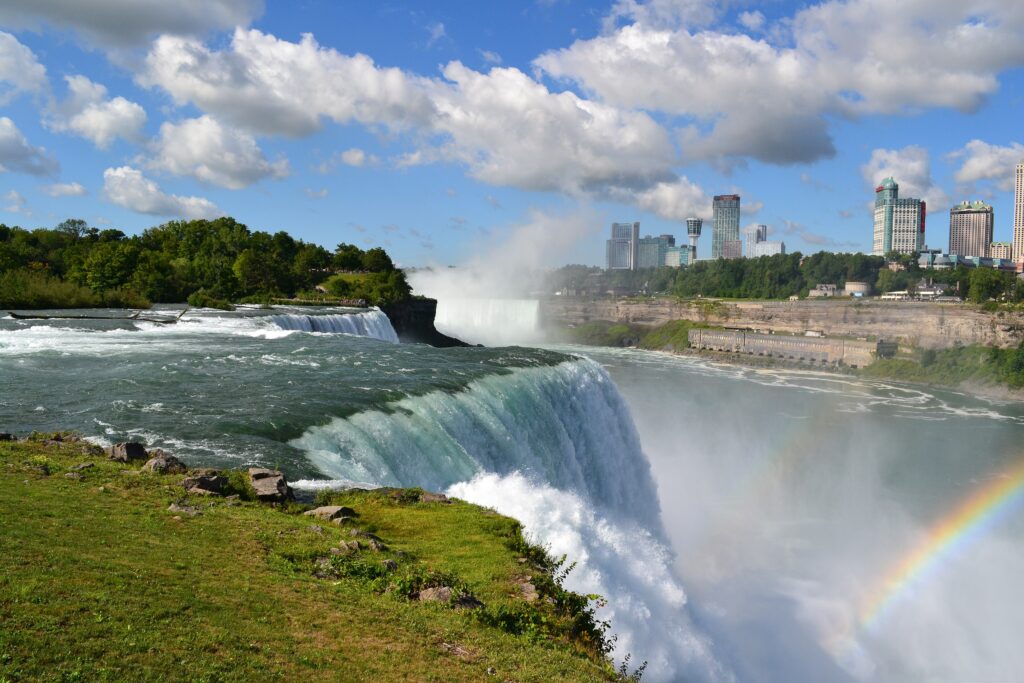
If you are staying near the falls, walking is the better option. The Rainbow Bridge walkway takes ten to fifteen minutes, the view partway across is superb, and pedestrian processing is usually far quicker than the car lanes on a summer afternoon. There is a small pedestrian toll — about a dollar, collected on the Canadian side as you head towards the US — but rates change, so check the Bridge Commission’s current figure. Driving makes sense if you are continuing onward — but if you are renting a car in Niagara, check your agreement first. Most companies permit US–Canada travel, but some restrict it or require notice, so carry the agreement with you.
NEXUS and wait times
NEXUS is the trusted traveller programme for this border, open to US and Canadian citizens and lawful permanent residents, plus Mexican nationals in the Viajero Confiable programme. Expect a non-refundable fee (US$120 at the time of writing), an in-person interview and a wait of several weeks — check current details on CBP’s NEXUS page. It is not something you can arrange the week before a holiday.
For live conditions, CBP publishes estimated land border wait times at bwt.cbp.gov, updated hourly, and the Bridge Commission shows current waits and traffic cameras. Weekends, holiday Mondays and mid-afternoon in summer are predictably worst; early morning is best.
What you can and can’t bring
Cannabis: leave it behind. This is the biggest trap at Niagara, because cannabis is legal in Canada and in New York State — and it remains illegal to carry across the border in either direction, in any quantity. That includes edibles, extracts, topicals and CBD products. It is illegal under US federal law regardless of state law, and the border is federal jurisdiction. CBSA penalties for undeclared cannabis run from CAN$200 to CAN$2,000, and serious cases can bring prosecution under the Customs Act or Cannabis Act. CBSA’s cannabis page is blunt about it.
Food and plants. Declare everything, every time — cooked or raw meat, fruit, vegetables, plants, seeds. Undeclared items can be seized and penalised even when they would have been allowed through; Canada’s penalties reach CAN$1,300. Going the other way, CBP prohibits citrus brought in from Canada (even if grown in the US), along with fresh tomatoes, bell peppers and most meat products. See CBSA’s guidance and CBP’s agricultural page.
Shopping and duty-free. Exemptions are time-based, and day trippers get less than they expect. Returning to Canada, you can claim up to CAN$200 after 24 hours away and CAN$800 after 48 hours — so a same-day shopping run earns no personal exemption at all, and alcohol and tobacco only count once you have been away 48 hours. Returning to the US, the headline $800 exemption requires at least 48 hours abroad and can only be used once every 31 days. See Canada’s exemptions guide and CBP’s exemptions page. Declare what you bought — officers are far more interested in people who lie than in people who owe a few dollars of duty.
Frequently asked questions
Do I need a passport for Niagara Falls?
Only if you cross the border — you can see the falls from either side without one. To cross, US citizens need a passport, passport card, enhanced driver’s licence or trusted traveller card at a land crossing; everyone else should carry a passport.
Can I walk across the Rainbow Bridge?
Yes. The Rainbow Bridge has a pedestrian walkway and is the classic way to cross on foot at the falls. The Peace Bridge also allows pedestrians and cyclists. The Whirlpool Rapids and Lewiston–Queenston bridges do not permit pedestrians at all.
How long does the border crossing take?
Anywhere from a few minutes to well over an hour at peak times. Walking is usually much faster than driving. Rather than relying on an average, check CBP’s live wait times and the Bridge Commission’s cameras on the day.
Can I bring cannabis across if it’s legal on both sides?
No. It is illegal to transport cannabis across the Canada–US border in either direction, in any form and any amount, regardless of provincial or state law. This includes CBD products. Do not do it.
Do children need documents?
Yes, and the requirements for minors differ from those for adults — a parent crossing without the other parent may be asked for a consent letter. Check current CBP and CBSA guidance before you travel.
One last thing: border rules genuinely change, sometimes with little notice, and this guide reflects what the official sources said at the time of writing. Confirm the requirements that apply to you with CBP, CBSA and your own government’s travel advice before you set off — an hour of reading beats being turned around at the booth. Once you are across, plan your stay with our guide to the best hotels overlooking Niagara Falls, and book a table at one of the restaurants with a view of the falls.