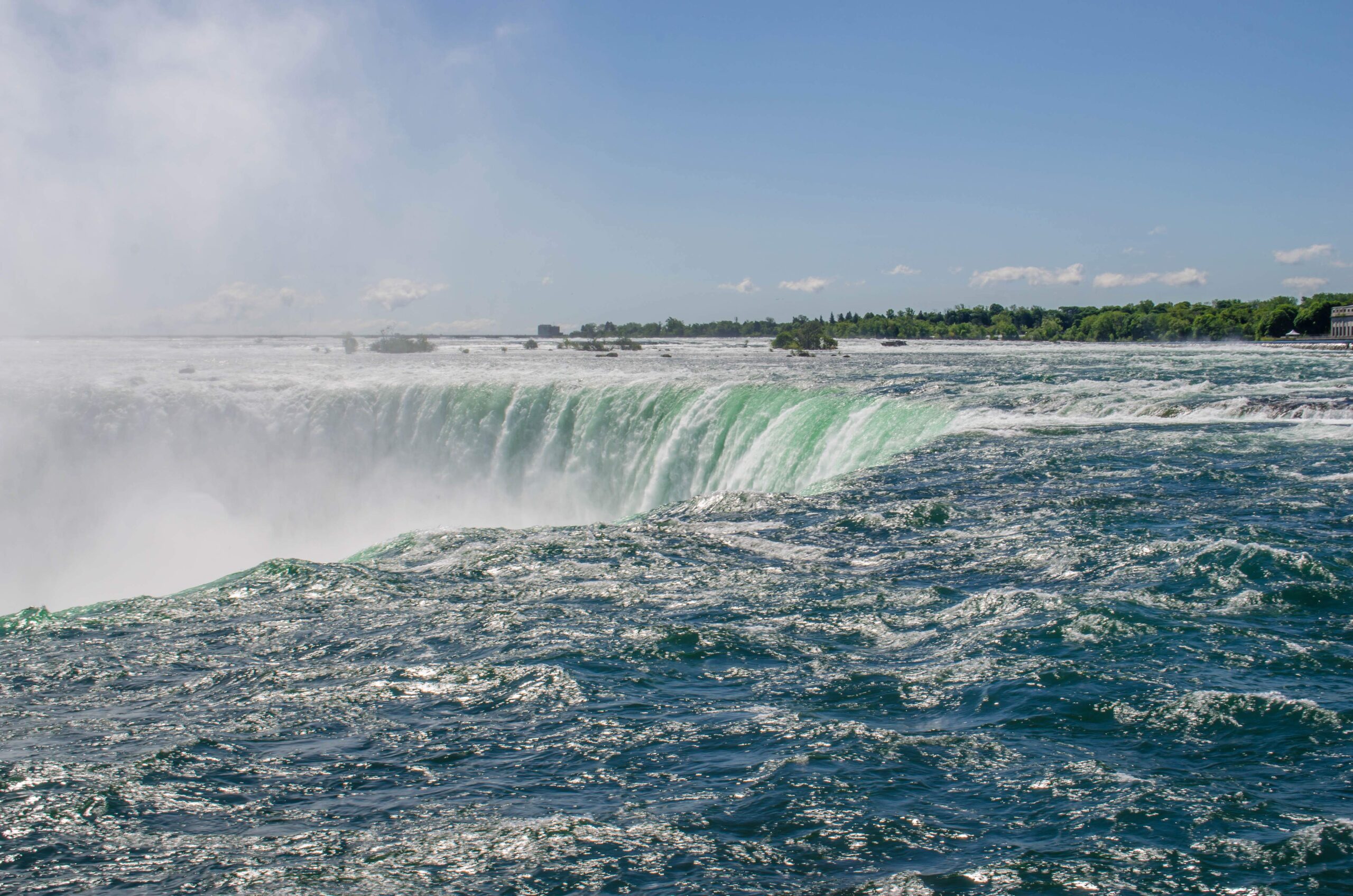
Niagara Falls is one of the more genuinely accessible major attractions in North America. You can get a close, unobstructed view of the Horseshoe Falls from a paved, level promenade on the Canadian side without leaving your wheelchair, and you can reach the water by elevator on either side of the border. But the picture is uneven, and the two sides differ sharply in how much they publish about it. Niagara Parks documents access, step counts and wheelchair availability attraction by attraction. Niagara Falls State Park in New York does not — its “accessibility” page is a website-compliance statement, not a guide to physical access. Where the Canadian detail below is specific, it is because it is documented; where the American detail is vaguer, it is because it genuinely is not published, and you should call the park at (716) 278-1794.
The Canadian side
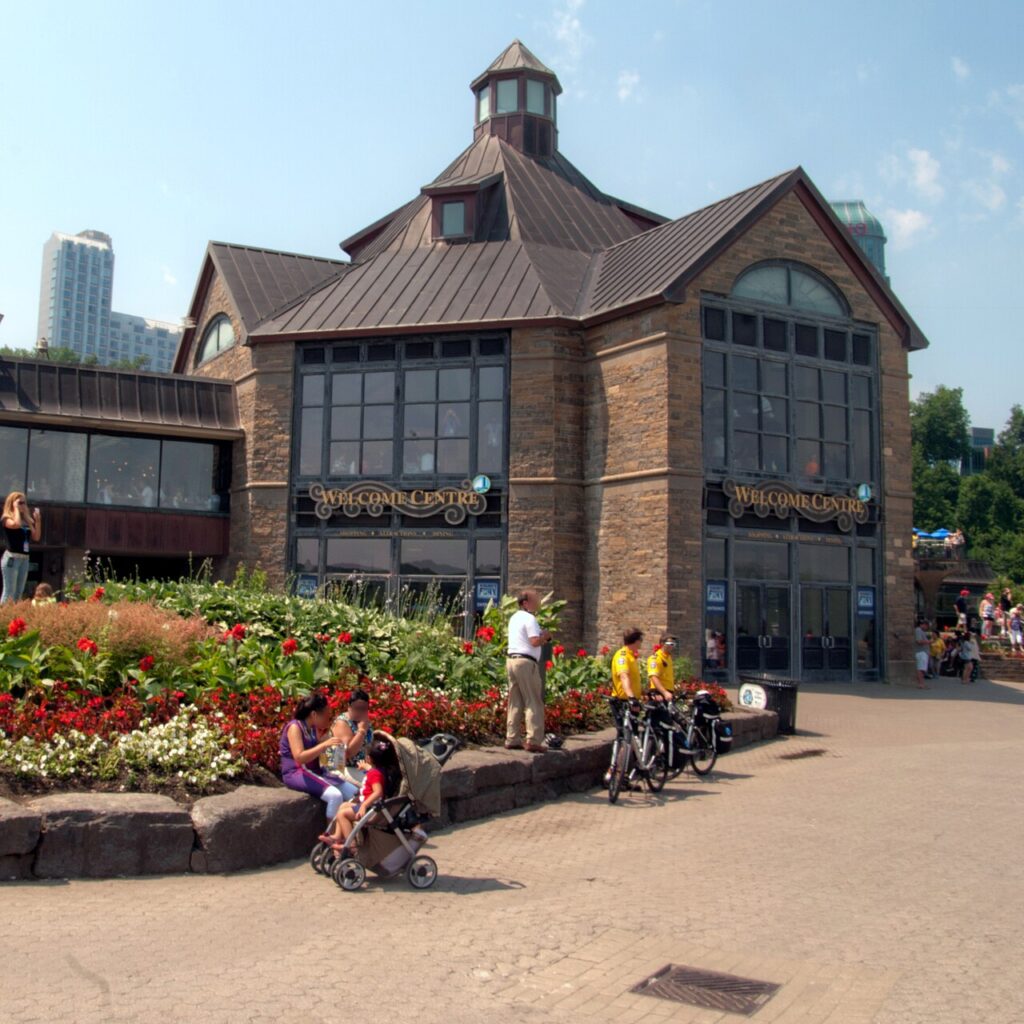
Table Rock and the Horseshoe Falls brink
Table Rock Welcome Centre sits at the brink, and the viewing railing runs along a paved, level promenade continuous with Queen Victoria Park. This is the single best accessible viewpoint at Niagara. Niagara Parks keeps up to eight wheelchairs at Table Rock for daily loan, first come, first served.
Journey Behind the Falls
This needs precision, because it is often described as simply “accessible” and it is not. Niagara Parks states it is partially wheelchair and scooter accessible. Elevators take you down to the tunnels, and the upper observation deck is accessible. The lower observation deck is reached by approximately 18 steps and is not. Admission is discounted where full accessibility is unavailable, so mention it at the desk. See the Niagara Parks accessibility page.
Niagara City Cruises
The Canadian boat is well set up. A gently sloped paved ramp runs from the Main Ticket Plaza to four elevators serving the Lower Landing and boarding area. Boarding ramps take wheelchairs, walkers and strollers. Both catamarans have designated seating marked with decals and two unisex accessible washrooms on the lower deck. Wheelchairs are loaned on site in limited numbers. One support person per guest travels free — though that applies to the Voyage to the Falls tour specifically, not other products. See their accessibility page.
Skylon Tower
Three exterior elevators carry guests to the top, and the revolving dining room is accessible — there are steps to reach it, but the tower provides a ramp. Skylon’s FAQ does not address the outdoor portion of the observation deck, and unofficial reports mention a few steps out to it. Call the tower if that matters to you.
The American side
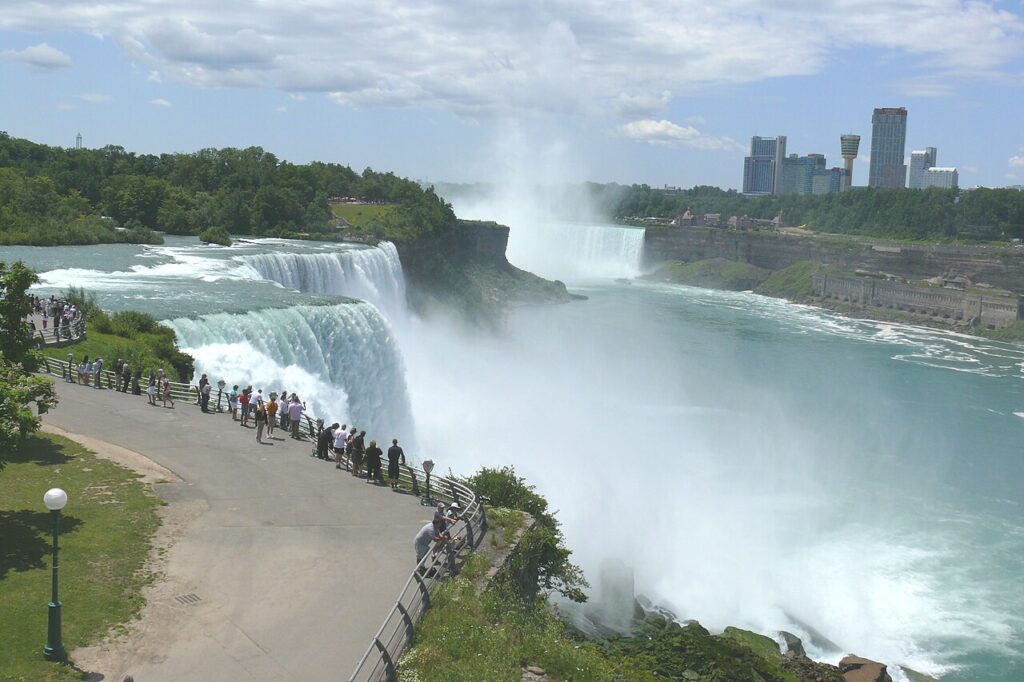
Prospect Point and the Observation Tower
The Observation Tower is the key piece of accessible infrastructure here. Its elevators reach both the deck and the base of the gorge, including the Maid of the Mist boarding site. The park states the elevator and deck are open to all visitors with no boat ticket required. The Crow’s Nest viewing area at gorge level is reached by stairs, and is currently closed for a major expansion expected to continue through the 2026 season.
Maid of the Mist
Maid of the Mist’s FAQ states that its facilities, including its boats, are fully ADA accessible, and trained service dogs are welcome. With the tower elevators serving the boarding site, the American boat is a realistic option. The boats have an upper level, and visitor accounts consistently say it is reached by stairs — but the operator does not state this, so treat the lower deck as your viewing level and ask at the ticket booth about boarding assistance.
Cave of the Winds
Be careful here — this is partially accessible at most. An elevator descends roughly 175 feet to gorge level, where the first section of boardwalk is generally navigable. But the Hurricane Deck, the reason most people go, sits at the top of the wooden boardwalk structure, reached by multiple flights of stairs on wet timber in heavy spray. It is not wheelchair accessible. The wooden decks also come down each autumn and go back up each spring, so the deck is unavailable in winter regardless. The park publishes no accessibility detail here, so call (716) 278-1794 and ask what you will reach on the day.
Goat Island, Luna Island and Terrapin Point
Goat Island has paved paths, ADA-compliant overlooks and accessible parking, and Terrapin Point’s Horseshoe Falls viewpoint is reached on paved paths. Luna Island is reached by a pedestrian bridge, and by most accounts there is a step-free approach alongside a stepped one. But the step-free routing across these three is described mainly by third-party trail guides rather than by the park, and paths have been altered by construction in recent years. If your day depends on it, ask the park to confirm current routes.
The same caution applies to Prospect Point and the wider park viewing areas: they are widely reported as paved and level, but the park does not publish route-level detail.
Getting around
WEGO buses on the Canadian side are fully accessible — every bus has a fold-out ramp and kneeling capability, with tie-downs for up to one wheelchair and one scooter per bus. That per-bus limit is worth planning around if your group includes more than one chair. Support persons ride free. The Falls Incline Railway, connecting the Fallsview hotel district to Table Rock, is also fully accessible: the carriage floor sits level with the platform. On the American side, the Niagara Scenic Trolley and Discover Niagara Shuttle are both lift-equipped, and Sight See Rentals on Old Falls Street rents wheelchairs and scooters.
If you would rather drive, our guide to car rental in Niagara Falls covers the practicalities. Niagara Parks charges accessible-permit holders on first parking at any of its lots, but lets you re-park the same day free at any other Niagara Parks paid lot if you display your original receipt.
Where to stay
The Fallsview district puts you within a level, paved walk or short WEGO ride of the brink — which is why most wheelchair users base themselves there rather than on Clifton Hill, a steep street. Several larger Fallsview hotels publish accessibility pages and offer rooms with roll-in showers, but features vary room by room and change with renovations. Book by phone, confirm the exact bathroom configuration, and get it in writing: “accessible room” covers a wide range of realities. Our roundup of the best hotels overlooking Niagara Falls will help you shortlist by location first.
Practical tips
Bring your accessible parking permit and understand its limits. New York says it honours out-of-state plates and permits, but the DMV’s guidance addresses other US states and does not specifically speak to permits issued in Canada. Ontario tells permit holders to contact the authorities where they are travelling to confirm the permit will be accepted. A mutual-recognition framework does exist between Canada, the US and other member countries, but neither government guarantees the cross-border case in writing — so check with the specific lot rather than assuming.
Support persons receive free admission at Niagara Parks attractions, and service animals are permitted at all Niagara Parks sites. And the mist is not a minor detail: the brink and both boat rides will soak you, so plan cover for anything electronic on your chair.
Accessibility provision changes. Elevators go out of service, boardwalks are rebuilt seasonally, construction reroutes paths. Everything here reflects what operators published at the time of writing — confirm directly before you travel.
Frequently asked questions
Which side of Niagara Falls is more wheelchair accessible?
The Canadian side, on balance. The Horseshoe Falls view is from a flat paved promenade, WEGO buses are fully accessible, and Niagara Parks documents access attraction by attraction. The American side has good bones — tower elevators, ADA routes on Goat Island — but publishes far less detail, which makes planning harder.
Can a wheelchair user go on the boat ride?
Yes, on both sides. Niagara City Cruises has a paved ramp to four elevators serving the boarding area, plus accessible boarding ramps, designated seating and accessible washrooms onboard. Maid of the Mist states its facilities and boats are fully ADA accessible, with tower elevators reaching the boarding site. Expect to view from the lower deck.
Is Cave of the Winds wheelchair accessible?
Only partially, and probably not in the way you are hoping. The elevator reaches gorge level and the first stretch of boardwalk, but the Hurricane Deck is up multiple flights of stairs, and the decks come down every autumn. The park publishes no accessibility details for it, so call ahead.
Will my accessible parking permit work across the border?
Probably, but nobody guarantees it in writing. New York honours out-of-state permits, but its guidance covers US states rather than foreign permits, and Ontario tells holders to check with authorities at their destination. Carry your permit and check with the specific lot.
The headline experience — the brink of the Horseshoe Falls, and getting out onto the water beneath it — is available to you. Build your days around the Canadian promenade, use the documented attractions as fixed points, and phone ahead about anything on the American side. If you are still choosing a base, start with our guide to the best luxury hotels in Niagara Falls; several of the restaurants with a view of Niagara Falls sit in the same Fallsview buildings.