
Last updated: July 2026
The Canadian side has the better views of Niagara Falls; the American side gets you closer to the water. From Ontario’s Queen Victoria Park you see all three waterfalls head-on in one panorama. From New York’s Niagara Falls State Park you stand beside the rapids at the very brink and — at Cave of the Winds — on a deck in the spray zone at the base. If you can only pick one and it’s your first visit, pick the Canadian side. If you can manage both, do both: they’re a 10-minute walk apart across the Rainbow Bridge.
That’s the verdict. Here’s the reasoning, category by category.
The views
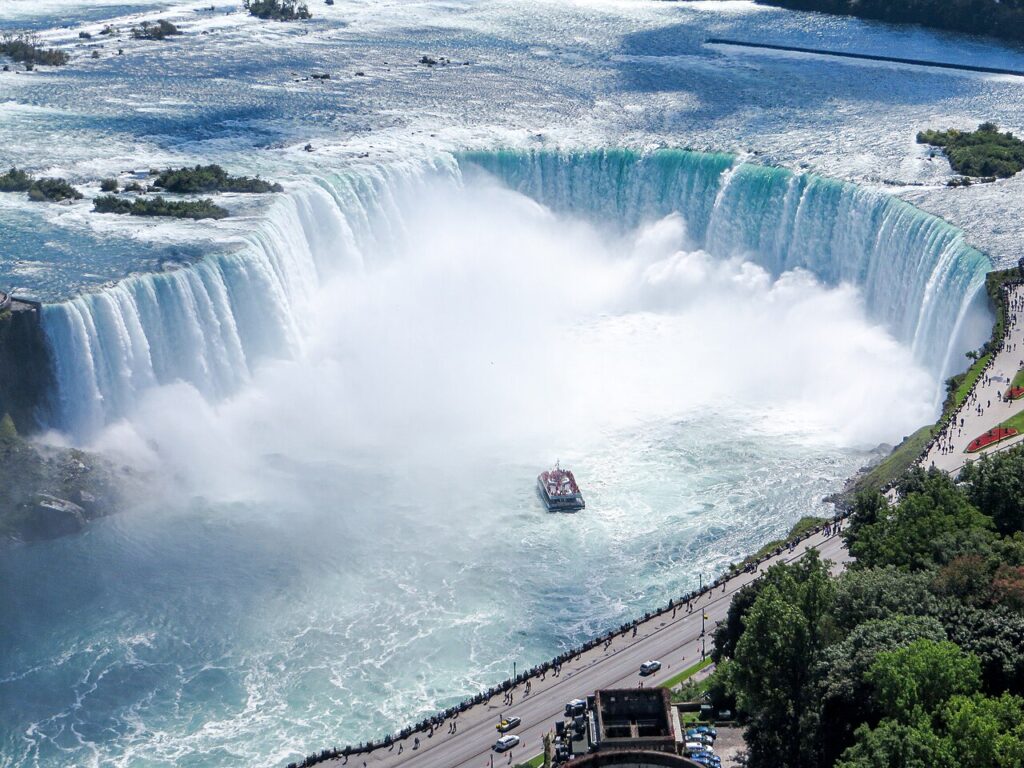
Geography decides this one. The falls face Canada. The Niagara River bends as it drops, so the Ontario bank looks straight into the curtain of Horseshoe Falls and down the line of the American Falls and Bridal Veil Falls. Every classic postcard photo — the full sweep, the mist column, the illuminated falls at night — was taken from the Canadian side.
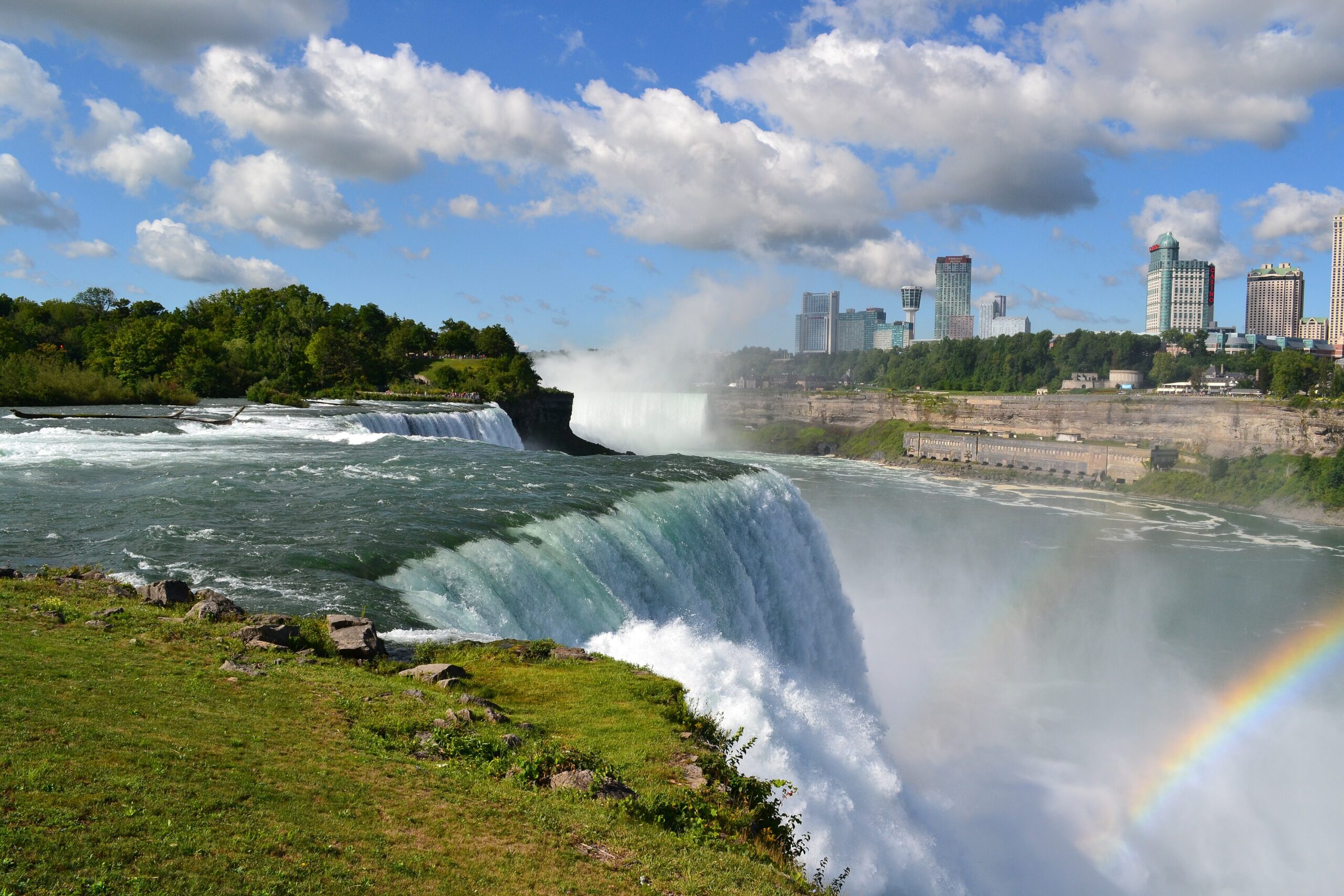
From the American side you’re standing on top of the falls, not in front of them. That’s not a flaw so much as a different show: at Terrapin Point and Luna Island you’re a few metres from the brink, watching the river accelerate and vanish. It’s visceral in a way the panoramic view isn’t. But you can’t properly see the falls you’re standing on.
Advantage: Canada — decisively, for first-timers.
The attractions
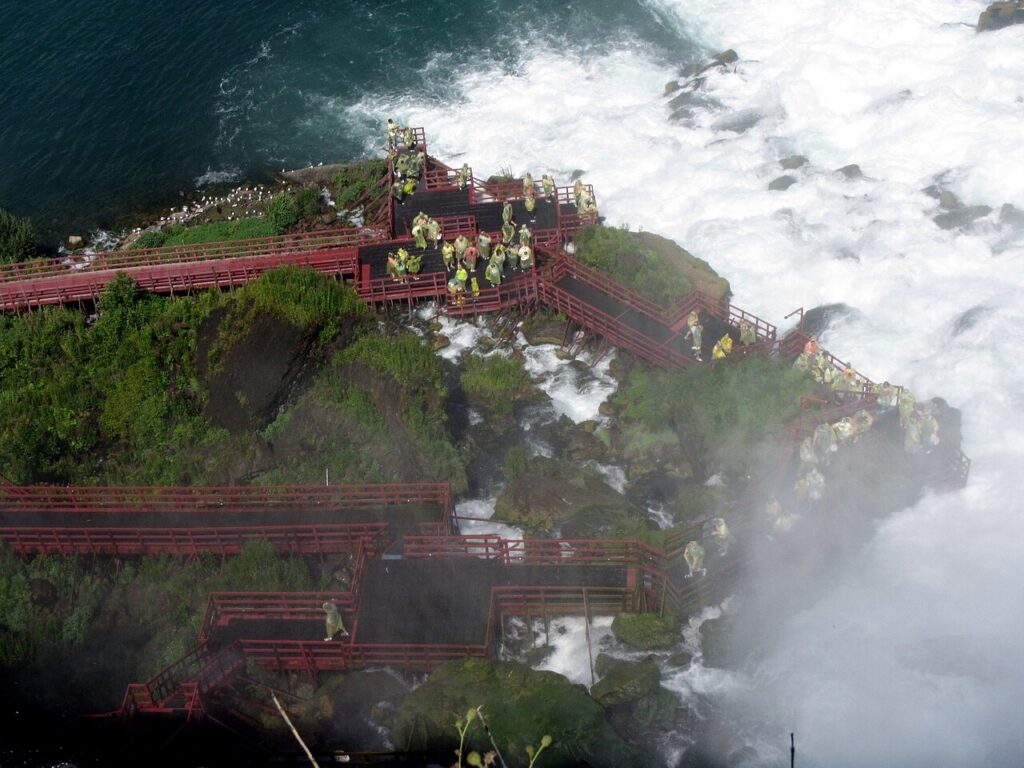
Both sides have one signature “get close” attraction and one boat.
| American side | Canadian side | |
|---|---|---|
| Boat tour | Maid of the Mist — US$30.25 adult (2026) | Niagara City Cruises — CA$47.95 + HST adult (2026) |
| Get-close experience | Cave of the Winds — wooden walkways to the Hurricane Deck at the base of Bridal Veil Falls (about US$23 adult in peak season) | Journey Behind the Falls — tunnels through the rock to portals directly behind Horseshoe Falls (about CA$33 + HST adult) |
| Setting | Niagara Falls State Park — the oldest US state park (1885), designed by Frederick Law Olmsted; free to enter | Queen Victoria Park and the Niagara Parkway — manicured gardens along the gorge rim; free to walk |
| Observation deck | Observation Tower at Prospect Point | Skylon Tower (236 m above the falls) |
| Beyond the falls | Whirlpool and Devil’s Hole state parks (free), Niagara Gorge trails, Old Fort Niagara | Clifton Hill, Niagara Glen, White Water Walk, Whirlpool Aero Car, botanical gardens, wineries en route to Niagara-on-the-Lake |
The Canadian side simply has more to fill a second day: the Whirlpool Aero Car, the gorge trails at Niagara Glen, and Niagara-on-the-Lake and wine country twenty minutes downstream. The American side counters with quieter, wilder gorge scenery — and far thinner crowds at its northern parks.
Advantage: Canada for variety; USA for nature and elbow room.
Cost
The American side is the budget pick. Entry to Niagara Falls State Park is free (parking runs about US$10–15 depending on lot and season), the best free viewpoints — Luna Island, Terrapin Point, Three Sisters Islands — cost nothing, and the boat is cheaper after currency conversion. On the Canadian side the viewing is also free, but parking near Queen Victoria Park is pricier and the attractions add up faster. For a family of four doing one paid attraction plus the boat, expect to spend noticeably less in New York.
Both sides offer plenty for free — we’ve collected the best of them in our guide to free things to do in Niagara Falls.
Advantage: USA.
Atmosphere, food and stays
This comes down to taste. The Canadian tourist district is loud and bright: Clifton Hill’s arcades and haunted houses, high-rise hotels with falls-view rooms, a casino, chain and independent restaurants stacked ten deep. Kids usually love it; travelers seeking quiet often don’t.
The American side is a small city that’s frankly still finding its feet outside the state park — fewer restaurants, fewer falls-view hotels, and not much nightlife. What it does have: Third Street’s growing food scene, easy parking, and the sense of visiting a park rather than a resort strip.
Advantage: Canada for convenience and energy; USA for calm.
Crossing between the two sides
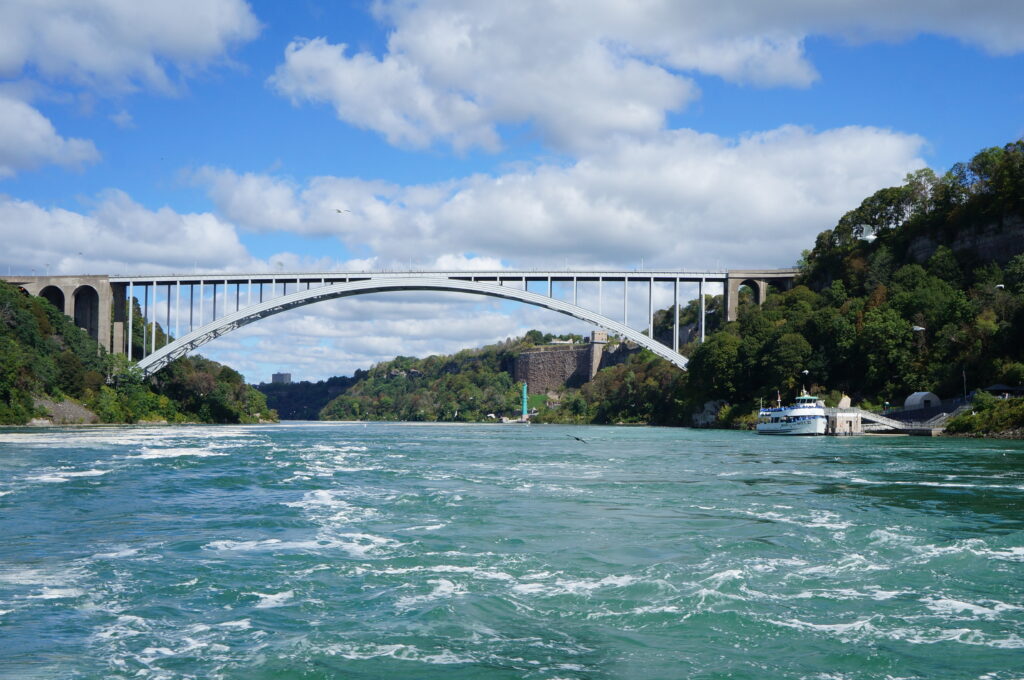
The Rainbow Bridge connects the two downtowns, and walking it is the easiest border crossing you’ll ever make: the pedestrian toll is US$1.00 (or CA$1.25) per person, collected on the Canadian side as you cross toward the US (walking into Canada is free), and the walk takes about ten minutes with a mid-river view straight down the gorge to both falls.
You’ll clear customs like any border: US and Canadian citizens need a passport, NEXUS card or enhanced driver’s licence; most other nationalities need a passport and, depending on citizenship, a visa or travel authorization for the country they’re entering (Canada’s eTA and the US ESTA only cover air arrivals in some cases — check requirements for land crossings before you travel). Weekday mornings the pedestrian line is usually minutes; summer weekend afternoons can stretch longer. Our border crossing tips cover the details.
Seeing both sides in one day
Entirely doable on foot, and the best plan if your documents allow it:
- Morning, American side: enter the state park early, walk Goat Island’s rim (Terrapin Point, Three Sisters), ride Maid of the Mist before the queues build, then do Cave of the Winds while you’re already wet.
- Midday: walk across the Rainbow Bridge (US$1, passport ready).
- Afternoon, Canadian side: the full panorama from Queen Victoria Park, Journey Behind the Falls or the Skylon deck, dinner with a falls view.
- Evening: stay for the illumination (every night of the year, from dusk) and — mid-May to mid-October 2026 — the 10 p.m. fireworks. Both are free.
If you’re staying overnight, sleep on the Canadian side: the illuminated falls from a falls-view room is the thing people remember.
The bottom line
- First visit, one side only: Canadian side. The panorama is the whole point.
- On a budget, love parks and hiking: American side, and you’ll be pleasantly surprised.
- Have a passport and a full day: both — morning in New York, afternoon and evening in Ontario.
- Traveling with kids: either works; Canada’s Clifton Hill keeps them entertained after dark, while the American side’s flat, car-free park paths are easier with strollers.
Frequently asked questions
Which side of Niagara Falls is better?
The Canadian side is better for views — you see all three falls head-on, plus the nightly illumination. The American side is better for getting close to the water, and it’s cheaper. First-time visitors who must choose should pick Canada.
Can you see Niagara Falls for free?
Yes, on both sides. Queen Victoria Park in Ontario and Niagara Falls State Park in New York are free to enter, and both offer front-row falls viewing. You only pay for parking, boats, and the get-close attractions.
Do I need a passport to see both sides?
To cross between the sides, yes — a passport or an accepted alternative (NEXUS, enhanced driver’s licence for US/Canadian citizens). There is no way to visit the other side without clearing customs. If you don’t have documents, choose your side before you arrive.
How do you get from the American side to the Canadian side?
Walk or drive across the Rainbow Bridge, which links the two tourist districts. Walking costs US$1.00 per person and takes about ten minutes; driving costs a few dollars more in tolls, and summer vehicle queues are often longer than the pedestrian line.
Is the Maid of the Mist on both sides?
No — Maid of the Mist sails from the American side only. The Canadian equivalent is Niagara City Cruises. The rides are nearly identical; here’s our full boat-vs-boat comparison.
Which side is open in winter?
Both, year-round — the parks don’t close. The boats stop from November to spring, but Journey Behind the Falls (Canada) runs all winter, the illumination is nightly, and the frozen mist scenery is remarkable. See what happens when Niagara Falls “freezes”.