

Niagara Falls sits about 130 km from downtown Toronto: roughly 90 minutes by car without traffic, a little over two hours by GO train, about the same by coach, or a full guided day if you book a tour. It is one of the easiest day trips in Canada — leave in the morning, spend six or seven hours at the falls, be back for dinner. The only real decision is how you travel, and that comes down to whether you value flexibility, cost, or not having to think about it.
Driving from Toronto
Driving is the fastest and most flexible option, and the route is simple: take the Gardiner Expressway west out of downtown onto the QEW (the Queen Elizabeth Way), and stay on it as it curves around the western end of Lake Ontario through Burlington and Hamilton, then south towards Niagara. Signs are clear the whole way.
Without traffic the drive is about 90 minutes. With traffic, all bets are off — the QEW through Mississauga and Burlington is one of the busiest stretches of highway in the country, and a summer Friday or long-weekend Sunday return can turn 90 minutes into three hours. Leave Toronto before 8am and head back before 3pm or after 7pm; that one piece of timing advice will save you more grief than anything else here.
Parking is plentiful but not cheap in peak season. Niagara Parks runs lots along the Parkway, with Table Rock the most convenient and the priciest. Park once for the day and use the WEGO bus to get around rather than moving the car and paying again. If you are in Toronto without a car, renting one splits well across three or four people; our guide to car rental in Niagara Falls covers rates and pickup. Rental agreements often have rules about taking the car over the border.
Taking the GO train
GO Transit runs direct trains from Union Station to Niagara Falls, and this is the option most people should take. The service runs year-round, seven days a week, with both weekday and weekend trains — worth stating plainly, because it was seasonal and weekend-only for years and plenty of older advice online still says so.
The journey takes a little over two hours, stopping at St. Catharines and Hamilton’s West Harbour. Check frequency, not duration: there are only a handful of direct trains a day, timed partly around commuters rather than tourists. A day trip lives or dies on catching the right train out and back, so plan around the GO Transit timetable rather than assuming you can turn up at Union and go — and do not trust a schedule quoted in any blog post, including this one. If the direct train does not suit, take Lakeshore West to Burlington and transfer to GO Bus Route 12, which runs to the bus terminal across from the train station.
Know this before you arrive: the Niagara Falls GO station (shared with VIA Rail, at 4267 Bridge Street) sits in the older downtown near the Whirlpool Bridge — not at the falls. It is roughly 4 km from Horseshoe Falls, a 30-minute walk that is fine in good weather and unpleasant in February. The fix is the WEGO bus, below; GO sells a combined GO+WEGO ticket bundling the round-trip train with WEGO access. Children 12 and under travel free on GO.
Coach and bus
Megabus and FlixBus both run frequent daily coaches from the Union Station Bus Terminal at 81 Bay Street, a short walk from the train platforms. Journey time is comparable to the train — around an hour and a half to two hours, depending on traffic, since coaches sit on the same QEW as everyone else.
The appeal is price and frequency. Both use dynamic pricing, so fares booked well ahead can be remarkably cheap while same-day walk-ups are not, and between them there are departures throughout the day — far more freedom over your return than the train allows. The trade-off is that a coach is at the mercy of traffic in a way a train is not, so treat the return time as a guideline rather than a promise.
Organised day tours
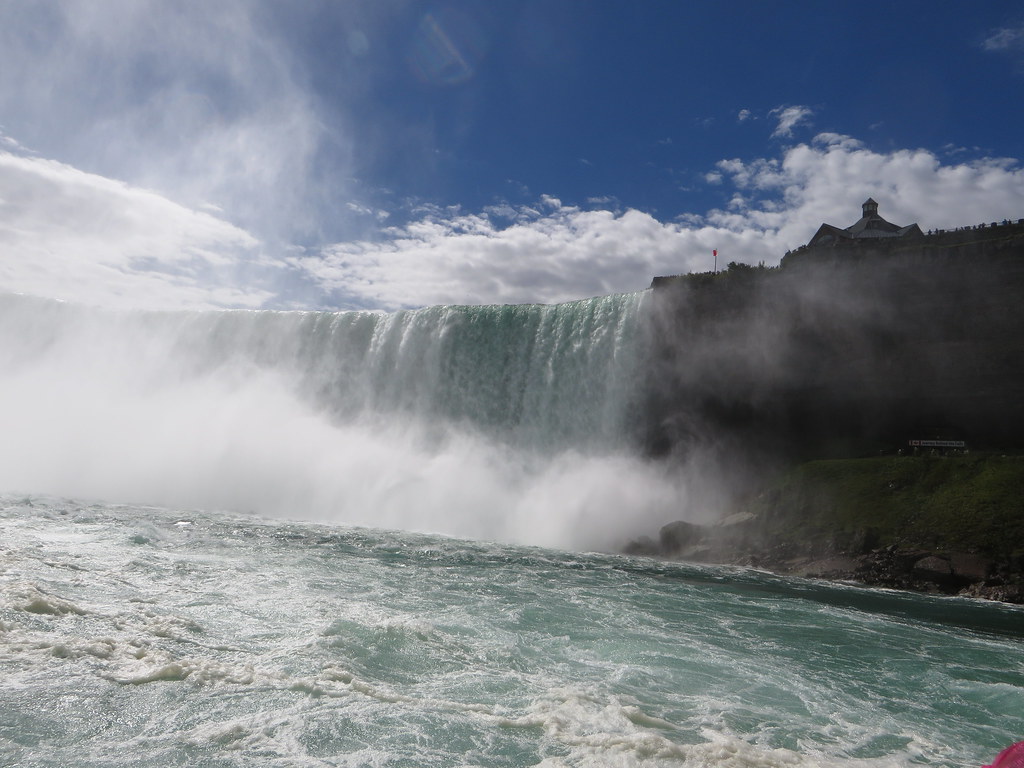
A guided tour suits one specific traveller: someone on a short Toronto visit who wants the headline attractions without planning anything. Most follow the same shape — hotel pickup downtown between roughly 7:30 and 8:30am, arrival late morning, a block of falls attractions, lunch, often a winery or Niagara-on-the-Lake stop on the way back, returning early evening.
Typical inclusions are the boat cruise, Skylon Tower, and Journey Behind the Falls, with photo stops at the Floral Clock and the Whirlpool. Read the inclusions line carefully — two tours at very different headline prices can work out identical once the on-the-day extras are added. Check group size too: a 50-seat coach and a 14-seat minibus are different days out. The trade-off is that you see a lot efficiently and linger nowhere.
What to do once you arrive
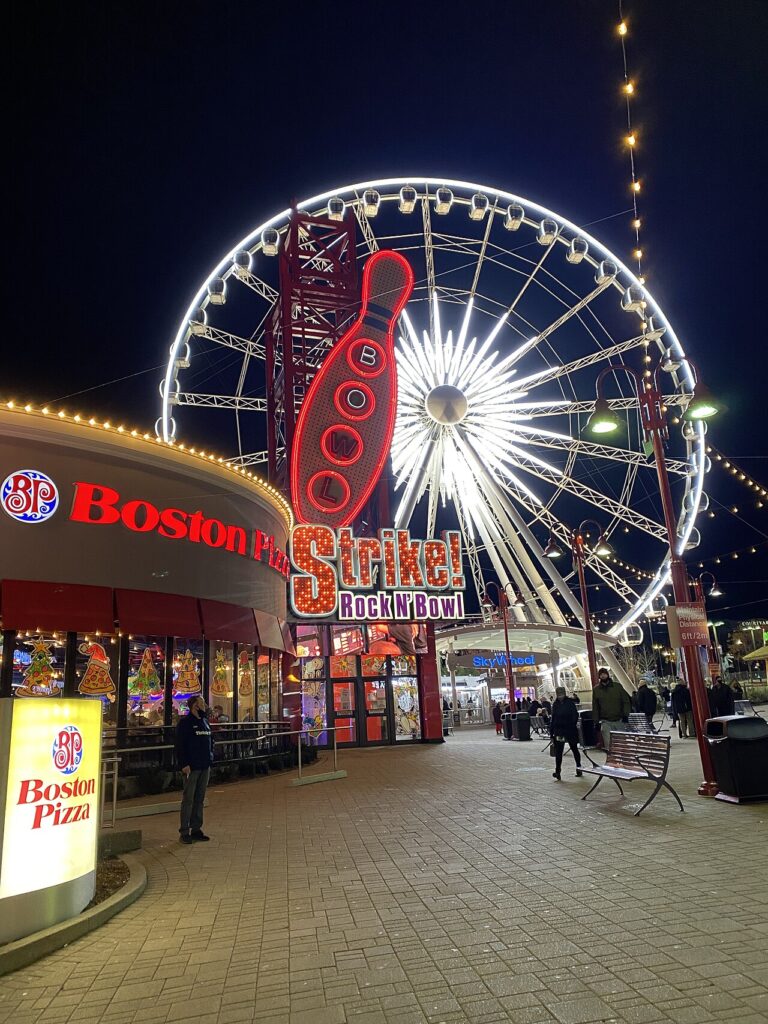
Whichever way you travel, the shuttle that ties the day together is WEGO. The Green Line starts at the GO/VIA station and runs down the Niagara Parkway; the Blue Line covers Table Rock, Fallsview and Clifton Hill; all lines meet at Table Rock, right at the brink of Horseshoe Falls. Passes come in 24- and 48-hour blocks. A seasonal shuttle extends to Niagara-on-the-Lake from roughly April through October.
A sensible day: go straight to Table Rock and see Horseshoe Falls from the brink while the crowds are thin. Do the boat cruise next — the Canadian operator is Niagara City Cruises, which rebranded from Hornblower a few years ago and still gets called by the old name everywhere, so do not be thrown by the labelling. It runs roughly May to late November and is the single best thing you will do here. Journey Behind the Falls runs year-round and is the winter alternative.
Have lunch with a view rather than eating on Clifton Hill out of habit; our roundup of restaurants with a view of Niagara Falls is built for this slot in the day. Spend the afternoon on the Parkway — the walk north along the river from Table Rock is lovely and free — or on Clifton Hill if your children have been patient all morning. Then be back at the station a half hour before your train; the WEGO does not hurry.
Frequently asked questions
How long do you need in Niagara Falls?
Six to seven hours covers the falls comfortably: the brink at Table Rock, a boat cruise or Journey Behind the Falls, lunch, and a walk along the Parkway. To add Niagara-on-the-Lake or wine country properly you need an overnight.
Do I need a passport for a day trip from Toronto?
Not for the Canadian side, where the best views are. You only need one to cross into Niagara Falls, New York — and for a single day from Toronto, crossing is rarely worth the border-queue risk on top of the travel time.
Is the GO train or the bus better?
The train is more comfortable, more predictable in traffic, and lands you at a station served directly by WEGO. The bus is often cheaper and runs far more frequently, giving you flexibility on your return. If your timings fit a direct train, take the train; if they do not, take the coach rather than contorting your day around a timetable.
Can you do Niagara Falls from Toronto in winter?
Yes, and it is underrated. The falls do not freeze, the mist builds spectacular ice formations along the railings, and crowds are a fraction of summer. The GO train runs year-round now. Just accept that the boat cruise is out of season and lean on Journey Behind the Falls and the indoor viewing towers.
What is the cheapest way to get from Toronto to Niagara Falls?
An advance-booked coach fare is usually the cheapest single ticket. For families the GO train can beat it, since children 12 and under travel free. For three or four adults, splitting a rental car and parking often works out lowest of all.
Do this trip once and you will probably want to come back for longer. Our guides to the best hotels overlooking Niagara Falls and the best luxury hotels in Niagara Falls show you the falls at night, lit up, with everyone else’s day trip long since headed back up the QEW.