

Last updated: July 2026
Every year from November through January, more than 100,000 gulls — of up to 19 different species — crowd onto the 58 kilometres of the Niagara River, a concentration so extraordinary that birders simply call this place the gull capital of the world. An estimated quarter of the planet’s Bonaparte’s gulls funnel past the falls in late fall, sometimes 30,000 in a single day. The river is a globally significant Important Bird Area — the highest tier of that designation — and since 2019 a Ramsar Wetland of International Importance. And you can watch the whole spectacle for free, from the same railings the summer tourists use — you’ll just have them mostly to yourself.
Why here? Why winter?
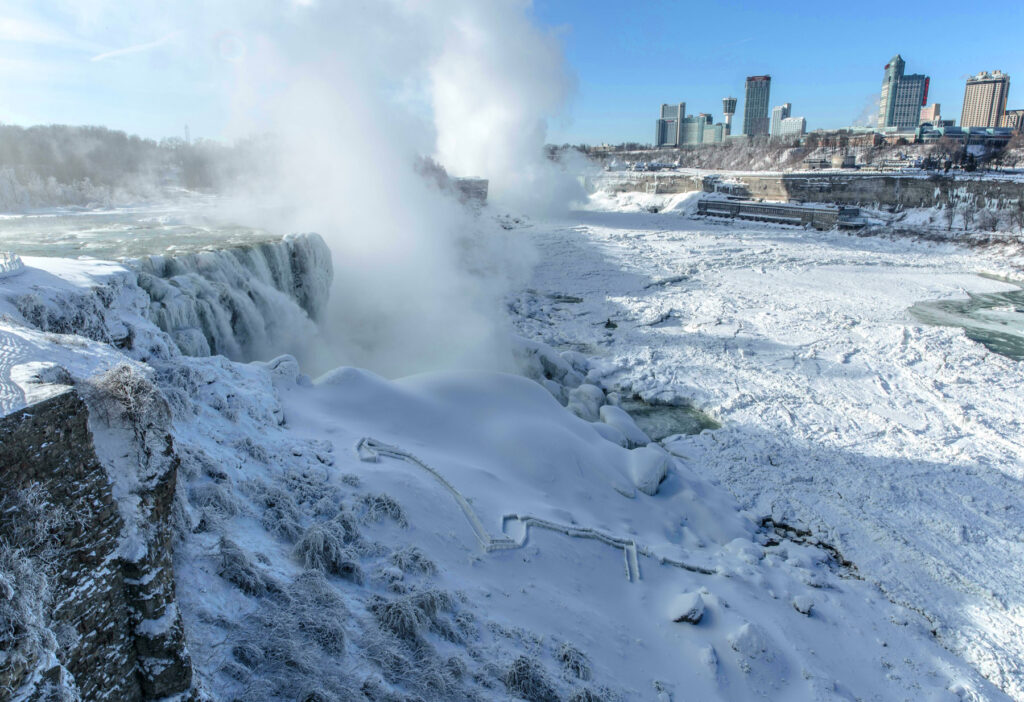
Three things collide on the Niagara River in winter, and each one is food or comfort if you’re a gull:
- The water never freezes. The river drains four Great Lakes at thousands of cubic metres per second — far too much moving water to ice over, even as everything around it freezes. As Lake Erie and the smaller lakes lock up in ice, the Niagara becomes the last open water for a hundred miles, and every water bird in the region knows it.
- The falls set the table. Fish swept over the brink and through the hydro turbines arrive at the bottom stunned or worse. Below the falls and the power-station outflows, dinner is continuously served — gulls wheel through the mist and pick it off the churn.
- It’s on the flyway. The river sits on a natural migration corridor between the upper lakes and the Atlantic coast. For Bonaparte’s gulls drifting south from the boreal forest (they nest, improbably, in spruce trees), Niagara is the great staging stop.
The result, on a good December day, is a river smoking with birds — rafts of them riding the rapids, columns of them circling the gorge, lines of them streaming to evening roosts on Lake Ontario.
What the fuss looks like: the species
The baseline crowd is tens of thousands of Bonaparte’s, ring-billed and herring gulls. The sport — the reason people fly in from other continents — is picking through them for everything else. The river’s winter list of gulls has reached 19 species, and dedicated scanners have recorded a dozen or more in a single day:
- Little gull — the world’s smallest gull, a European specialty with smoky-black underwings; the Niagara is one of North America’s most reliable places to find one, flickering inside a Bonaparte’s flock.
- Iceland and glaucous gulls — the pale “white-wingers” down from the Arctic.
- Franklin’s gull, Sabine’s gull, black-legged kittiwake — prairie and ocean wanderers that turn up most years to the delight of everyone with a scope.
- Great black-backed gull — the world’s largest gull, looming over the rest like a bouncer.
It’s not only gulls. The winter river hosts thousands of ducks — canvasbacks, common goldeneyes, buffleheads, all three mergansers — plus the occasional harlequin duck riding white water like it’s a spa, bald eagles patrolling for the slow, and peregrine falcons that nest in the gorge year-round. Our general birding guide covers the warmer months.
Where to watch (the classic circuit)
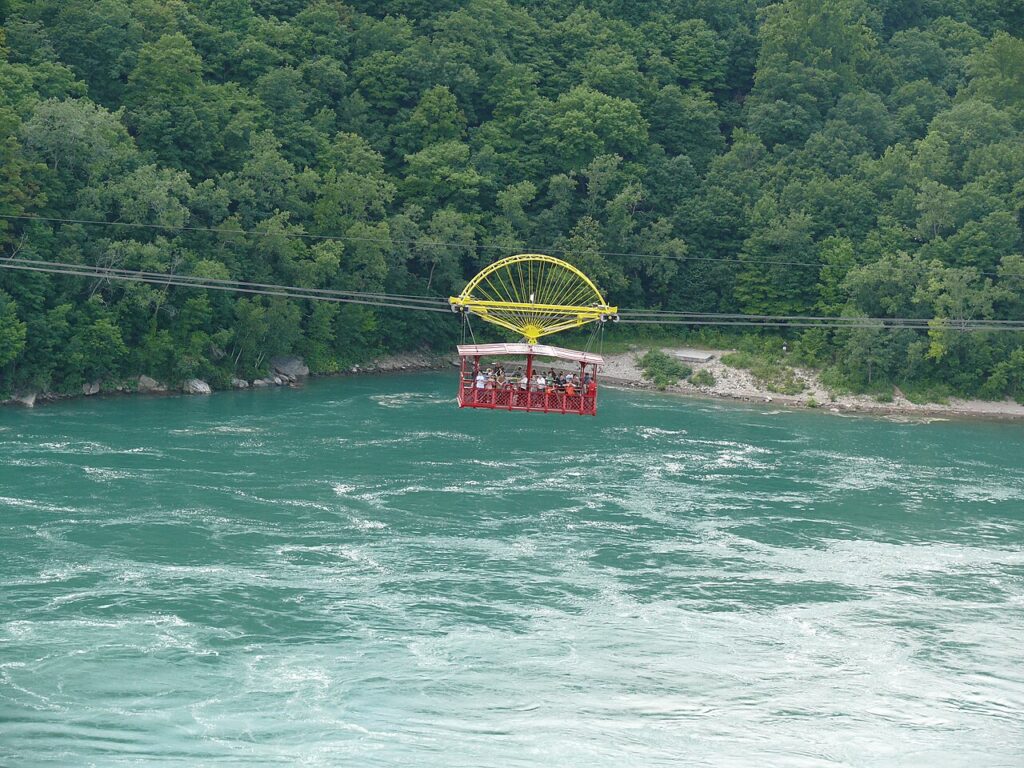
Birders work the river as a driving loop, stopping at overlooks on either shore. All of these are free:
- Above the falls — the Control Gates and Dufferin Islands (ON). Scan the broad, shallow rapids upstream of the Horseshoe: Bonaparte’s flocks feed here in quantity, and the islands give sheltered close views.
- The falls basin — Table Rock and Prospect Point. Gulls hang in the mist at eye level. Even non-birders should spend ten minutes here watching them surf the updrafts.
- Sir Adam Beck / Robert Moses power stations overlook. The turbine outflows concentrate fish — and therefore gulls — more densely than anywhere else on the river. This is where the rarity hunters stand, scopes in a row, on December weekends.
- The Whirlpool and Devil’s Hole. Rim viewpoints on both sides; Devil’s Hole State Park (NY, free) has stairs partway into the gorge for water-level views of feeding frenzies. The gorge trails here are covered in our gorge hiking guide.
- Lewiston and Queenston waterfronts. The lower river widens and slows — good light in the afternoon, big loafing rafts of birds, easy roadside viewing.
The whole circuit follows the Niagara Parkway on the Canadian side, one of the prettiest winter drives in Ontario even before you count a single bird.
How to actually enjoy it (a non-birder’s guide)
- Timing: mid-November through early January is peak; Bonaparte’s numbers crest in late November–December. Afternoons beat mornings at most overlooks for light, and the hour before dusk brings the day’s most dramatic movements as birds stream downriver to roost.
- Optics: binoculars make it fun; a spotting scope makes it an obsession. No optics at all? Stand at Table Rock and watch the mist-surfers — still worth it.
- Identification pressure: none. Nobody is quizzing you. “Small ones, medium ones, huge ones, and apparently that speck is famous” is a perfectly valid day list.
- Dress for the gorge in winter — wind off the river is serious. Warm boots, real gloves, and a thermos turn a 20-minute stop into a comfortable hour.
- Go with the experts once: Buffalo Audubon and Ontario birding groups run winter outings along the river most seasons, and eBird’s recent sightings for “Niagara River” will tell you exactly what’s being seen this week. A gull identification workshop sounds absurd until you’re at Adam Beck surrounded by people having the time of their lives.
A river that earned its titles
The Niagara River Corridor was named an Important Bird Area in 1996 — among the first in Canada, and a globally significant one, the highest tier. In 2019, the US side was designated a Ramsar Wetland of International Importance, the 40th site in the United States, recognizing what the winter bird numbers had been saying for decades: this short, furious river between two Great Lakes is world-class habitat, not just a world-class view. Conservation groups on both sides — from Buffalo Audubon to Birds Canada — continue to monitor and protect it. The gulls, for their part, remain unimpressed by the paperwork and keep coming for the fish. More on the river’s ecology in our Niagara River history and ecology guide.
Frequently asked questions
Why are there so many gulls at Niagara Falls?
Open water and easy food. The river never freezes, so it’s the region’s last open water in winter, and fish stunned by the falls and power-station outflows provide a constant buffet. Add the river’s position on a major migration corridor and you get 100,000-plus gulls at peak.
When is the best time to see the gulls on the Niagara River?
Mid-November through early January, with late November and December the heart of it. Late afternoon offers the best light and the most movement. It conveniently overlaps the Winter Festival of Lights — birds by day, lights by night.
How many gull species can you see at Niagara?
Up to 19 species have been recorded along the river — one of the highest gull diversities anywhere on Earth. A good single day can produce a dozen species for skilled observers; casual visitors will easily enjoy the three abundant ones plus whatever rarities the scopes find.
What is a Bonaparte’s gull?
A small, buoyant, tern-like gull that nests in trees in Canada’s boreal forest. Roughly a quarter of the world’s population passes along the Niagara River in late fall, with single-day counts as high as 30,000 — the river’s signature bird spectacle.
Do I need to pay to go birdwatching at Niagara Falls?
No. Every classic viewing spot — Dufferin Islands, Table Rock, the Adam Beck overlook, Whirlpool and Devil’s Hole state parks, the Lewiston waterfront — is free. It might be the best free wildlife spectacle in eastern North America; here are more free things to do while you’re there.
What is the Niagara River Important Bird Area?
A designation recognizing the river corridor’s global significance to birds, granted in 1996. The US side added Ramsar Wetland of International Importance status in 2019. The designations reflect the corridor’s role as critical winter habitat for gulls and waterfowl.